What This Summer Taught Me About Gardening in Miami
Every year I learn something new from my garden. And gardening in Miami will humble you very quickly.
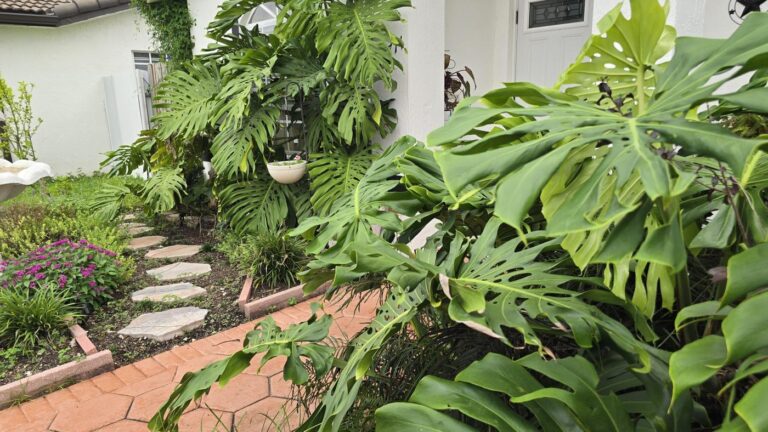
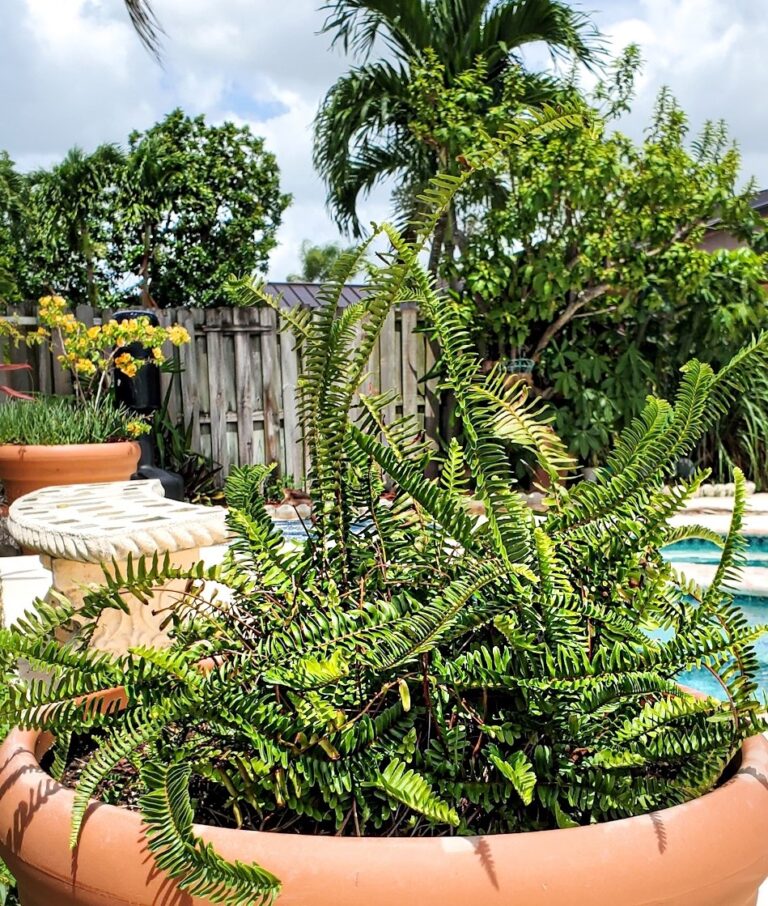
We don’t have the short growing season that much of the country has, but that doesn’t mean everything grows beautifully here. Summer brings intense sun, heat, humidity, heavy rain, and stretches where the garden seems to dry out faster than I can keep up with it. Some areas around my pool get especially intense, with heat and light reflecting off all that hard surface.
Yet somehow, other plants absolutely love these conditions.
Some plants surprised me this year. Some struggled in places I thought they’d be perfectly happy. A few proved I’d underestimated them completely. And others reminded me that sometimes the problem isn’t the plant at all — it’s where I decided to put it.
So rather than pretending everything performed beautifully, here’s what actually happened, and what I learned from it.
Some Plants Are Much Tougher Than They Look
One of the biggest things I’ve learned is not to automatically assume something delicate-looking needs to be babied.
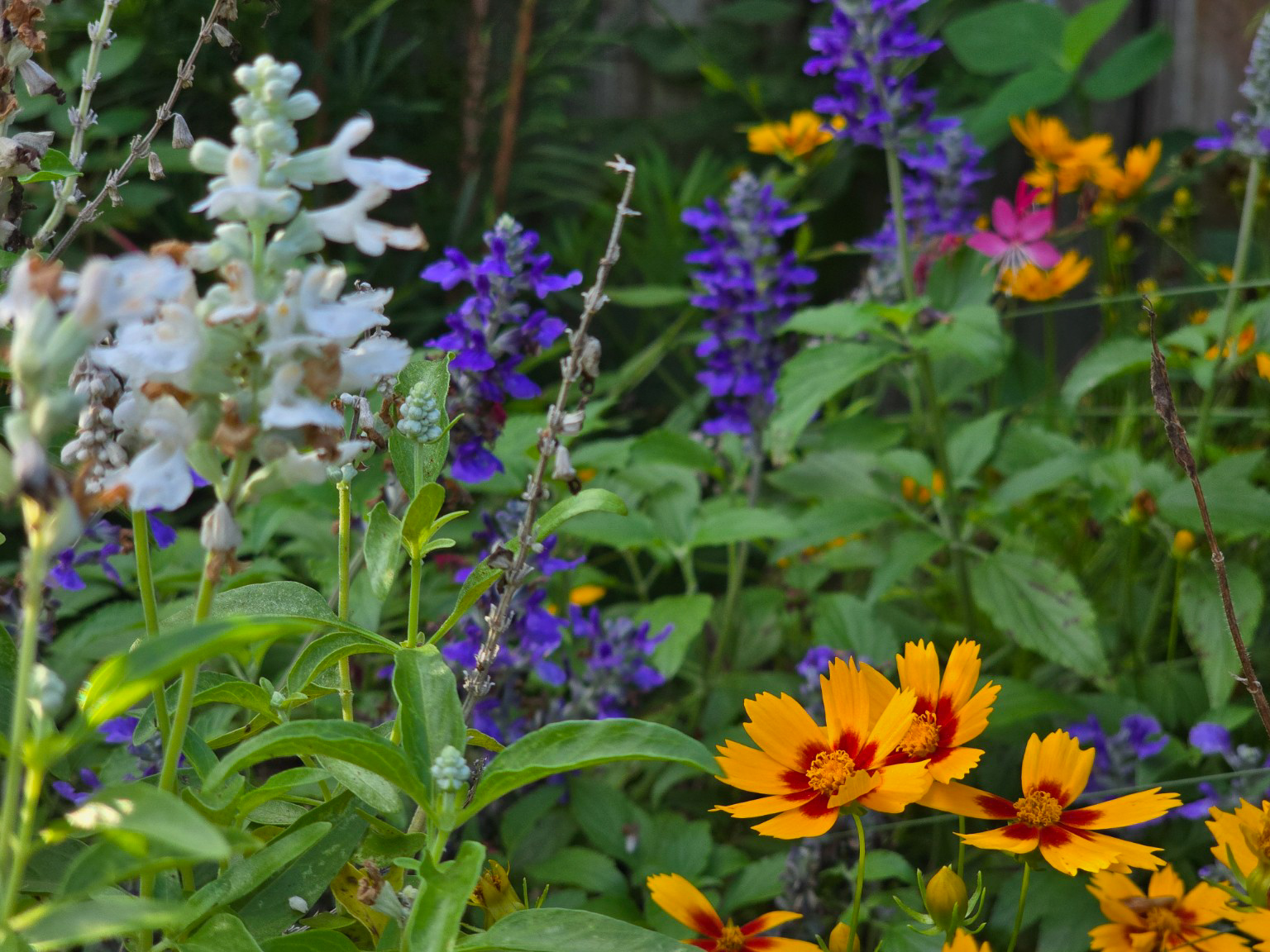
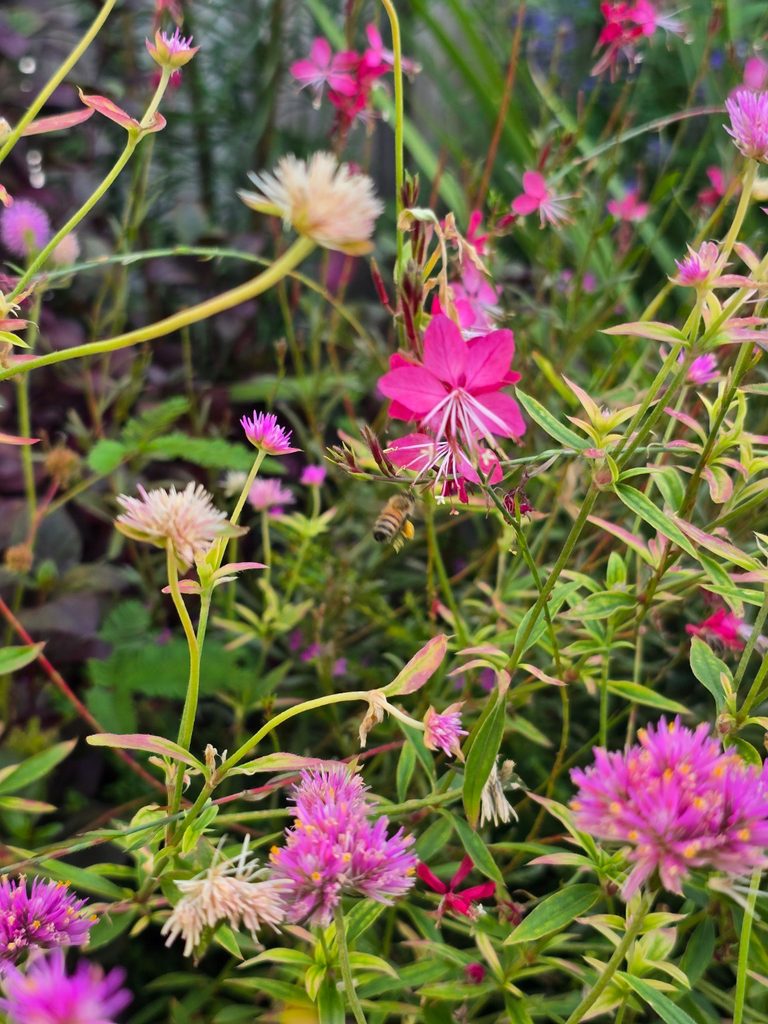
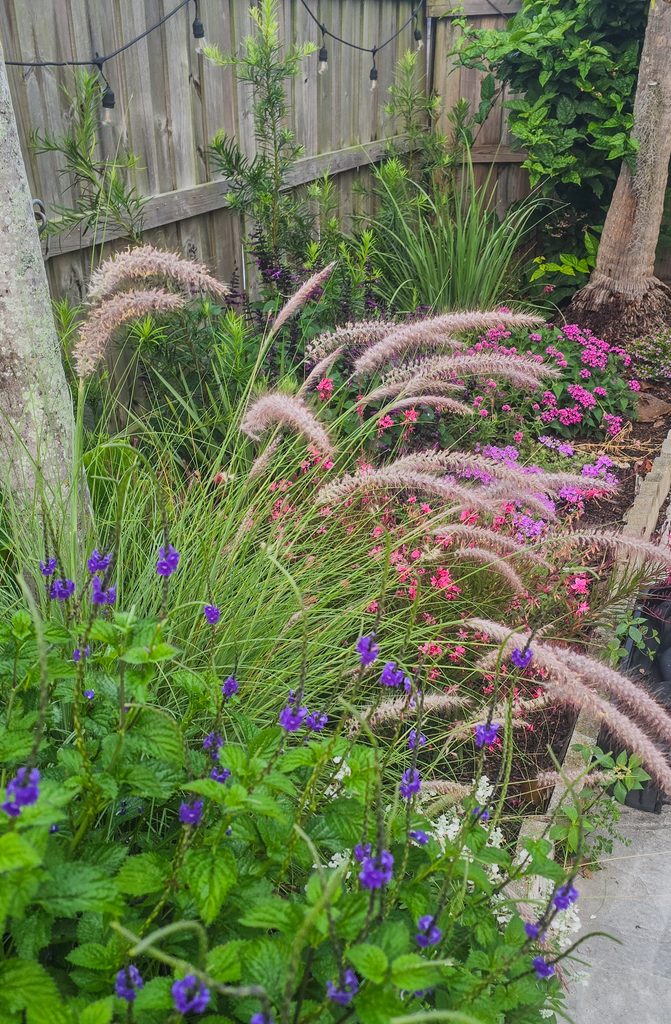
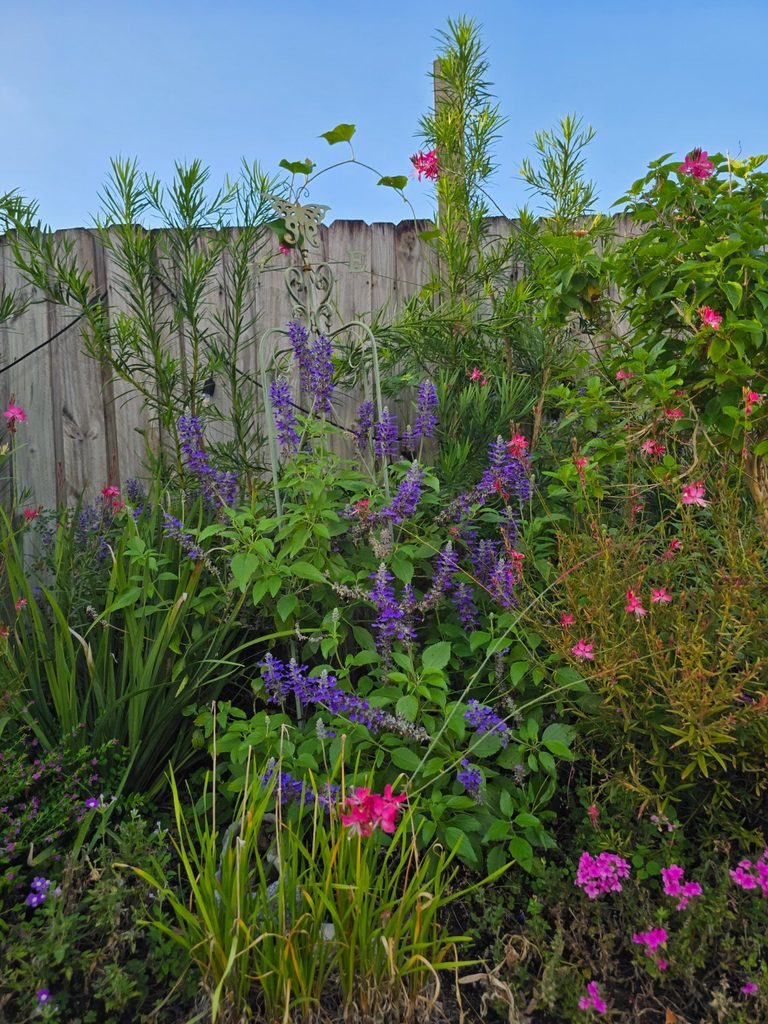
My salvias are a good example. They’ve dealt with Miami heat, humidity, rain, and strong sun, and still manage to flower and bring movement and color into the garden. More than that, they bring life with them — I wanted this garden to attract hummingbirds, butterflies, bee’s, and other pollinators, and watching them actually use the plants I’ve chosen has changed how I look at the whole space.
I’m not choosing plants based only on whether they look beautiful anymore. I want them to do something — flowers, movement, fragrance, a contribution to the little ecosystem developing around the house. If a plant can look beautiful and survive a South Florida summer while doing all of that, it’s earned its place.
My Fountain Grass Taught Me Not to Judge a Plant by Its Hair
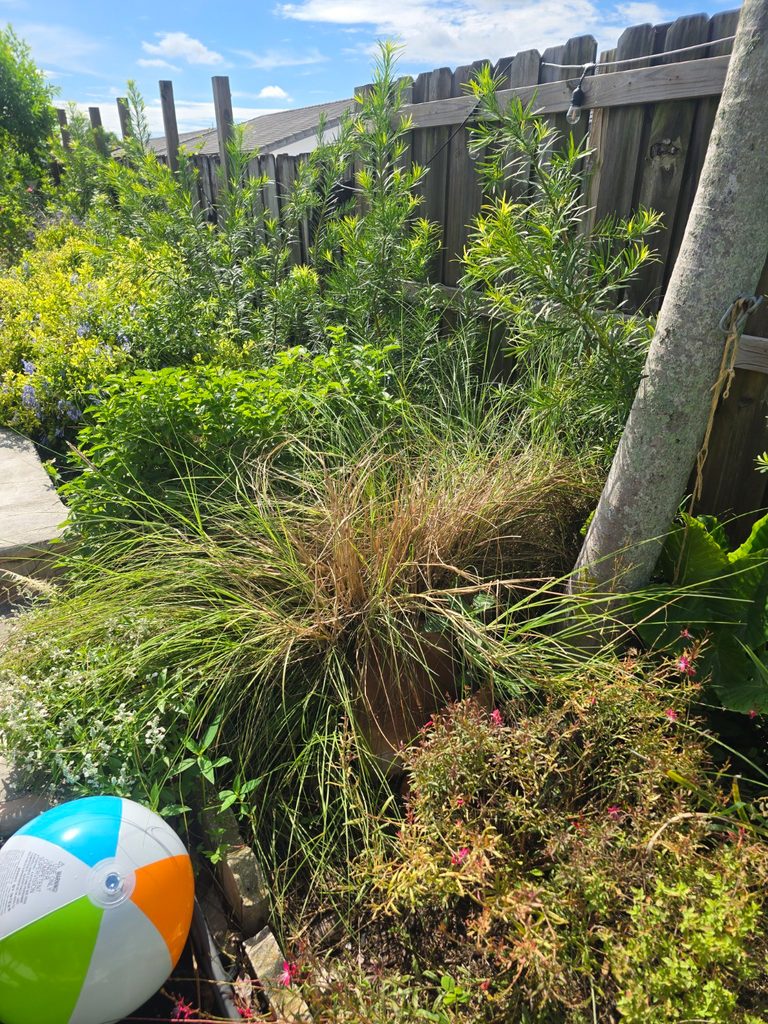
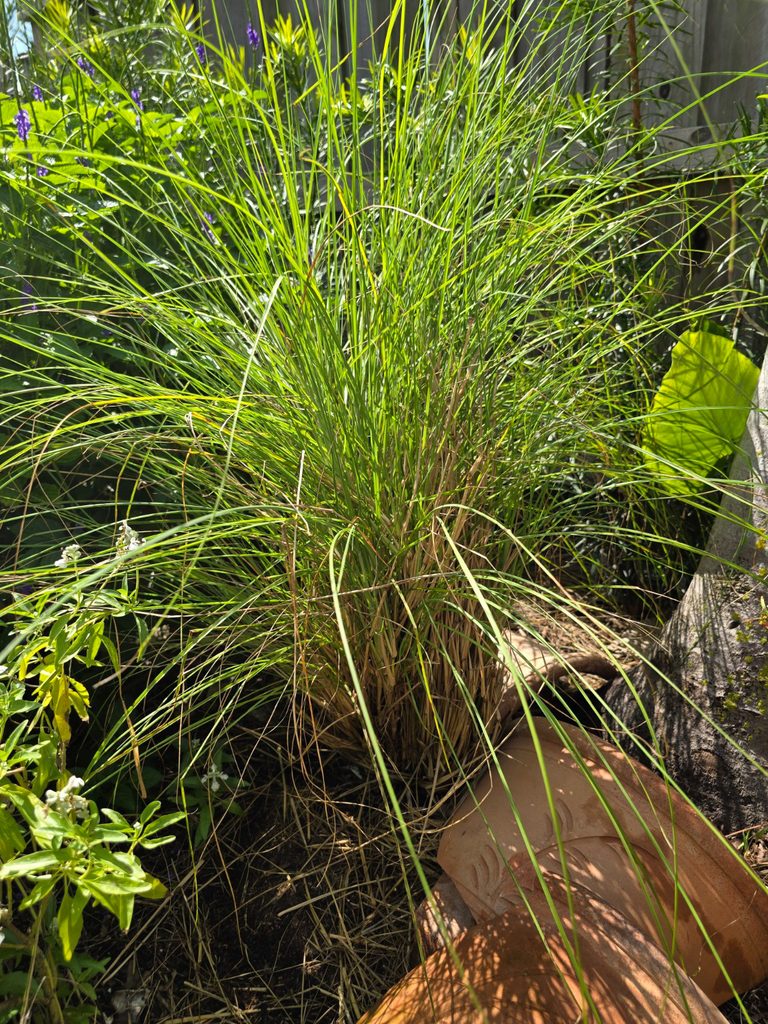
My fountain grass looked enormous and ratty— until I cleaned it out. Underneath all that mass of foliage, the actual plant coming from the crown wasn’t nearly as big as it appeared. Old growth, brown material, rain-soaked blades flopping over everything nearby — and the plants around it were paying the price. My salvia in front was being pushed forward and wasn’t flowering properly toward the back because the grass was lying on top of it.
Once I cleared it out, I could see the plant’s actual structure again. Good reminder that bigger isn’t always healthier: sometimes a plant looks full because it’s genuinely thriving, and sometimes it just needs a haircut.
Full Sun in Miami Is Not the Same as “Full Sun”
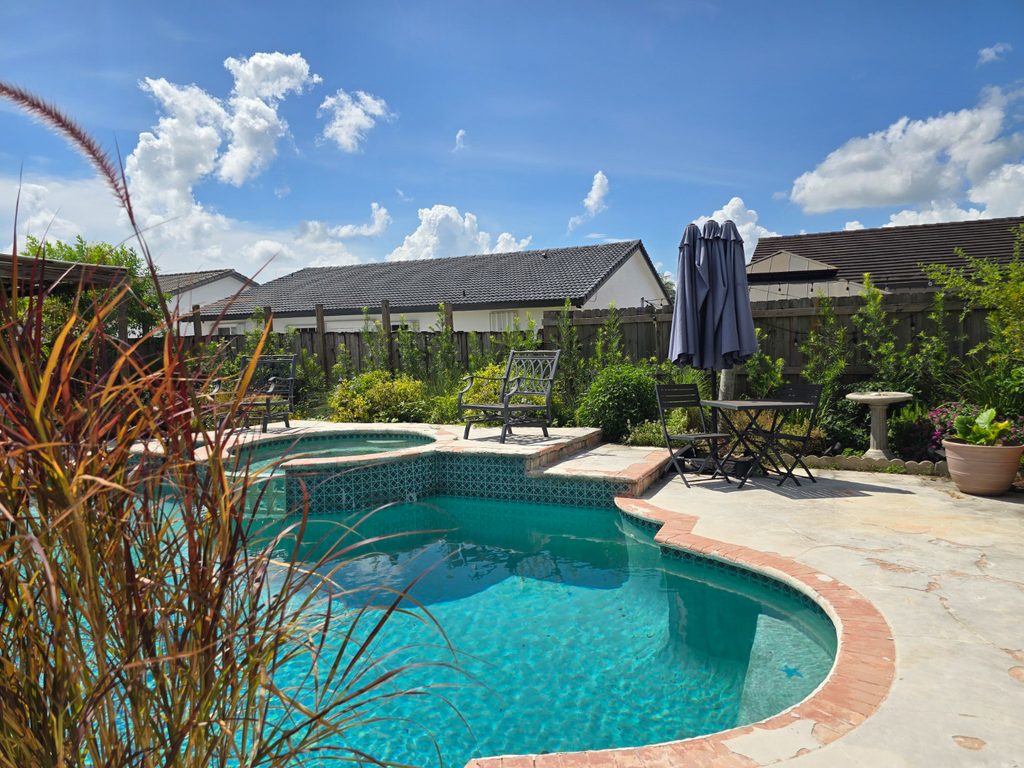
This sounds obvious now, but it wasn’t always. A plant tag can say full sun, and there’s still a considerable difference between “a few hours of sunlight” and “sitting beside a swimming pool surrounded by hard surfaces in Miami in August.”
I’ve watched plants that should technically tolerate full sun struggle. The real conditions around them are far more intense than any label suggests. That’s made me pay much closer attention to microclimates: Where does the afternoon sun actually hit? When does an area start getting shade? Which spots stay wet after a heavy rain? Where does heat reflect off the pool and hardscape?
Two plants can sit a few feet apart in my yard and effectively be growing in two different environments. I’m getting better at seeing that before deciding a plant is failing. Sometimes it doesn’t need fertilizer. It doesn’t need more water. It needs me to move it.
Rescuing Plants From My Own Decisions
I love rescuing plants from a clearance rack. But sometimes the plant that needs rescuing is one I already own.
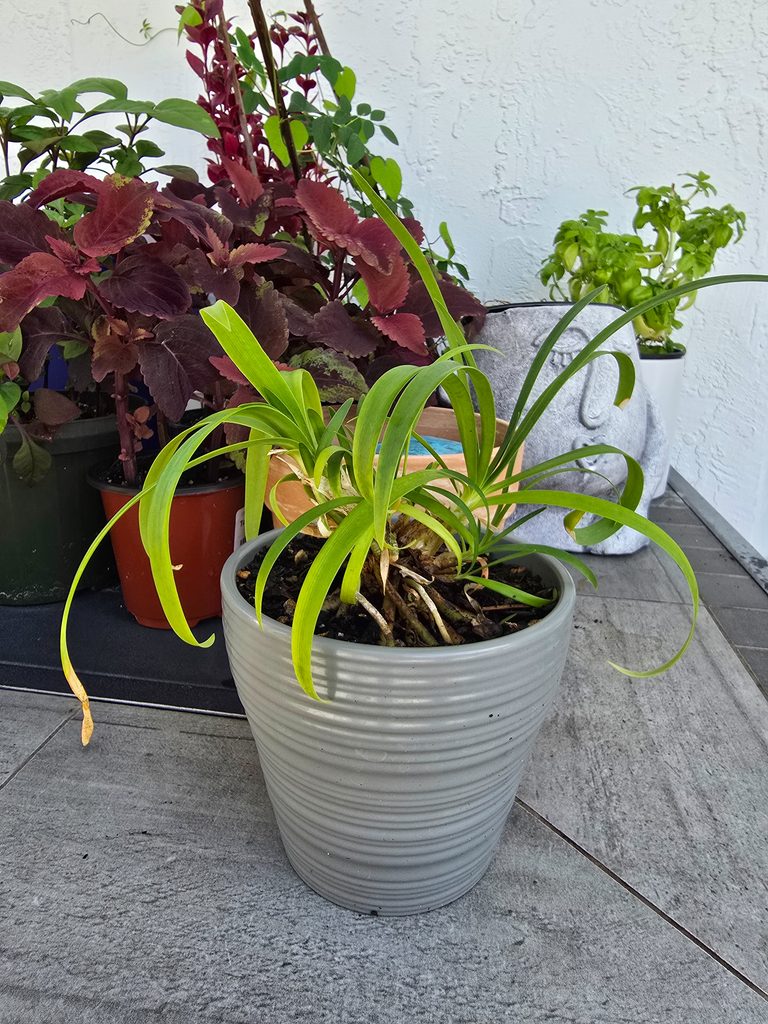
My Peter Pan agapanthus didn’t come home struggling — I paid full price, for a full size plant. I planted it in the ground, and it made clear it did not appreciate my decision. It declined badly enough that I nearly lost the whole thing. Before that happened, I managed to save one tiny surviving section, which I moved into a pot and I’m still nursing back.
That’s a different kind of plant rescue. I wasn’t saving a neglected plant — I was trying to save a perfectly good plant from a growing situation that wasn’t working. And I think that distinction matters, because when a plant starts declining, my instinct is to wonder what’s wrong with it. Sometimes nothing is. I just put it in the wrong place.
That little agapanthus has also made me more patient about recovery. A struggling plant doesn’t always need five interventions at once — sometimes it just needs the right conditions and enough time to respond.
Learning to Work With the Garden I Actually Have
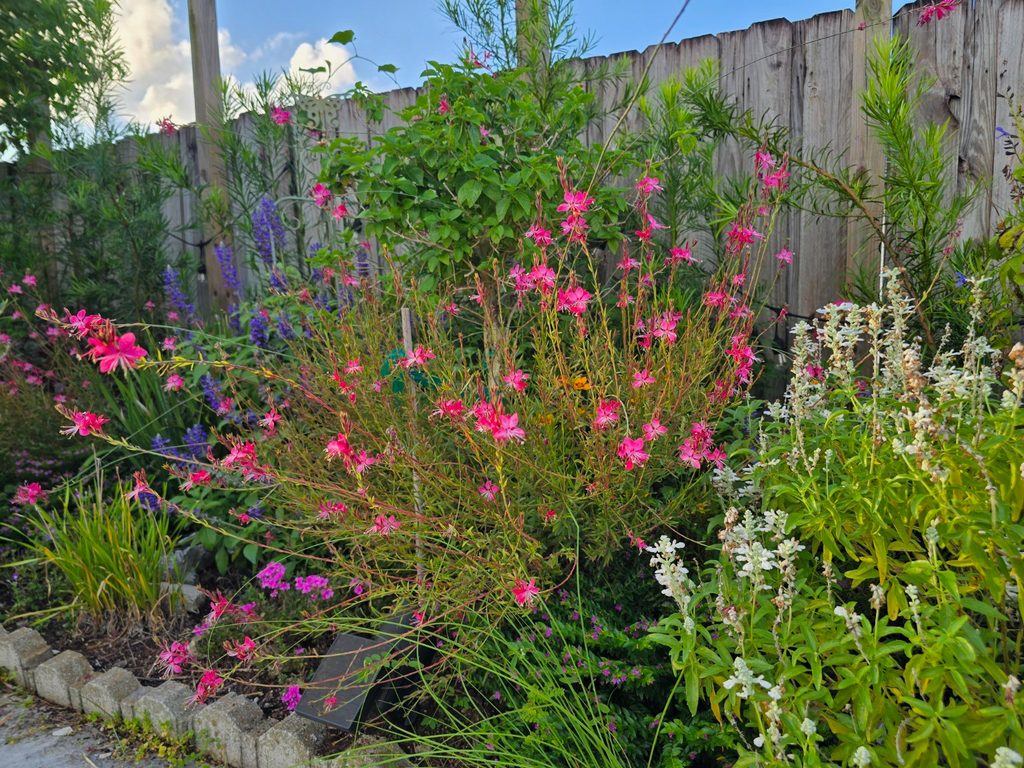
There are plants I love that simply don’t love my garden back. Lavender, hydrangeas, and I have had this discussion more than once. I love them. Miami does not care.
At some point, gardening gets a lot more enjoyable once you stop forcing every plant you like into conditions it doesn’t like. That doesn’t mean I’ll stop experimenting — half the fun is experimenting — but I’m learning the difference between experimenting and repeatedly fighting nature. If I’m constantly rescuing a plant from the climate, relocating it, monitoring it, hoping it survives another month, I have to ask whether it’s actually worth growing here — especially when something else nearby is thriving five feet away with zero drama.
The Biggest Surprise Has Been How Fast the Garden Has Changed
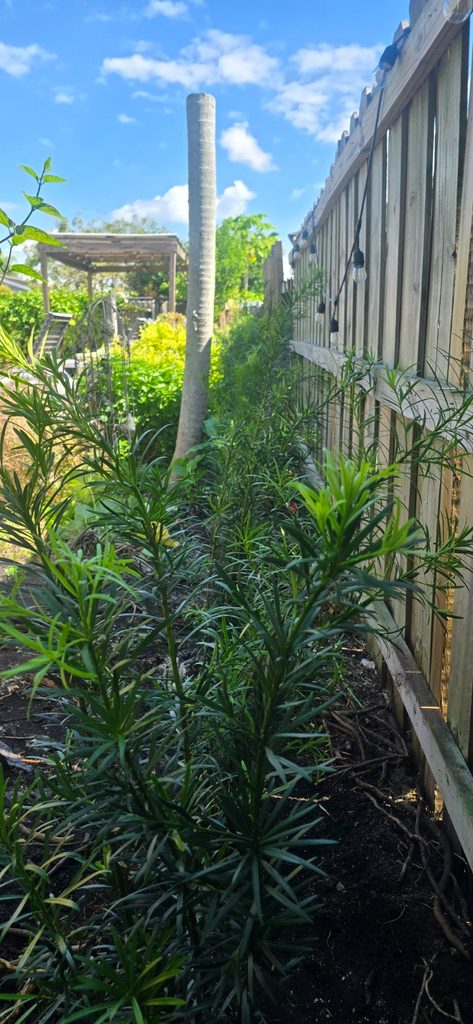
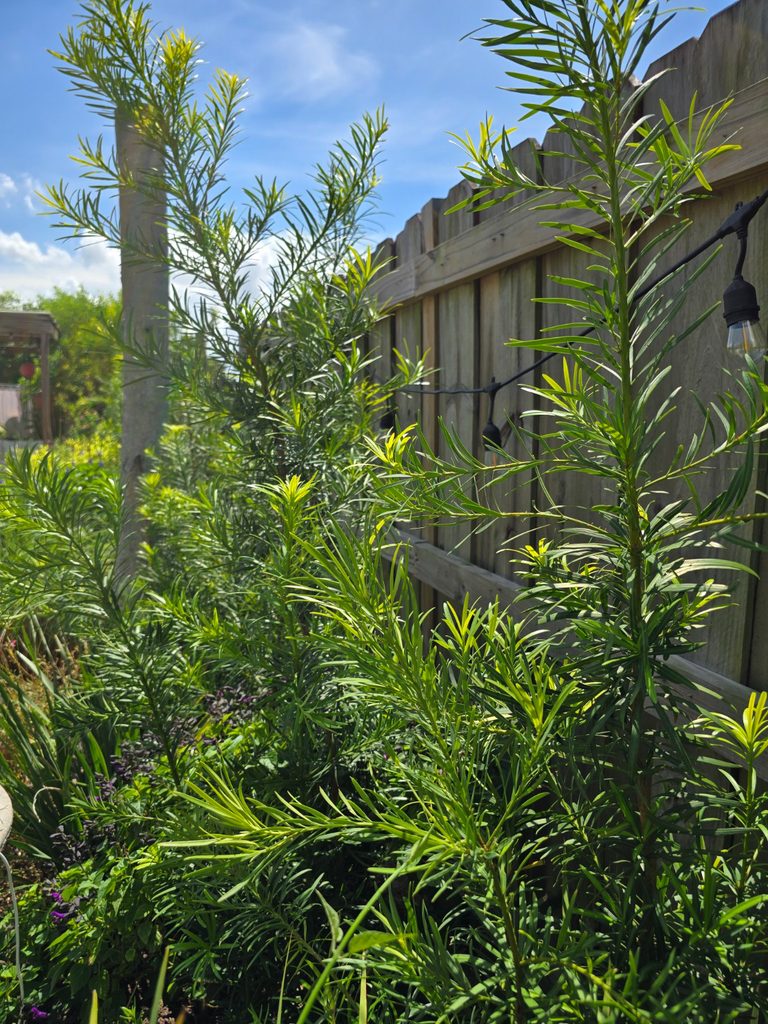
When you look at your garden every day, it’s easy to miss how much has actually happened. Then I look back at photos from a few months ago.
My Podocarpus hedge has changed tremendously since it went in last October. Plants that once looked tiny in their beds have filled in; areas that looked unfinished are starting to look intentional.
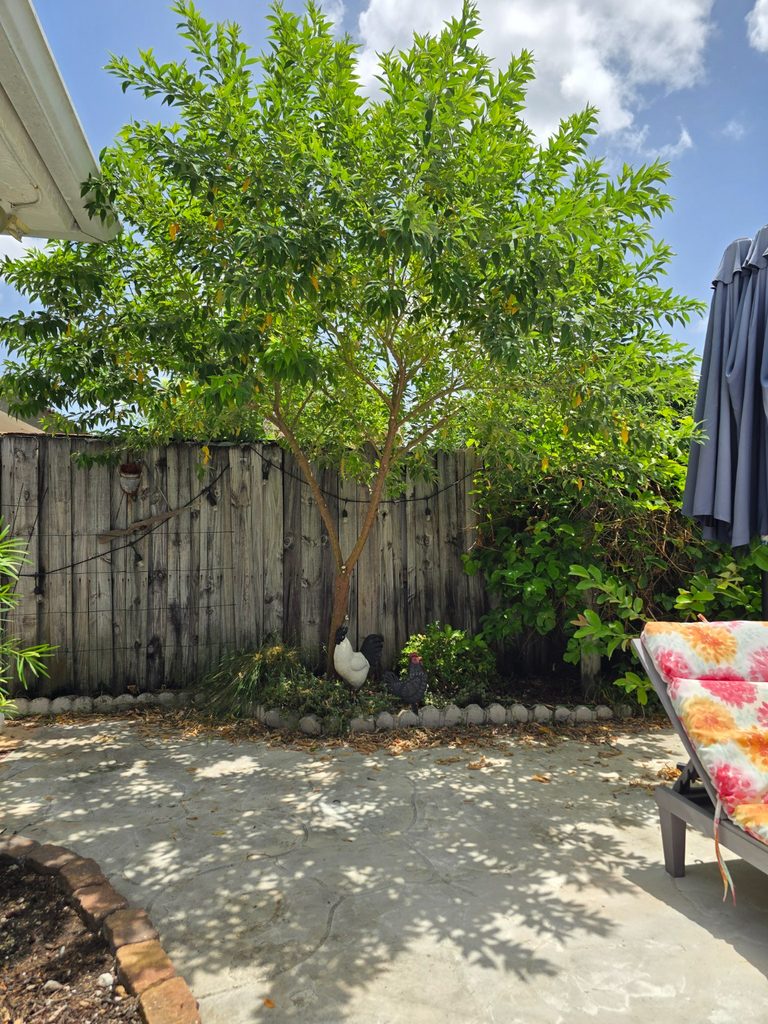
Even my pigeon pea tree surprised me — I grew it from seed last year, and that little seed has turned into one of my favorite plants in the garden. It produced plenty of gandules (pigeon peas), and with the way I’ve been pruning it, it’s developed into a beautiful, rounded little tree that gives me exactly the shape and shade I want.
I know it won’t be a permanent fixture in the landscape, and that’s actually made me appreciate it more — it’s taught me what kind of small tree I eventually want to use elsewhere. Sometimes a temporary plant teaches you what you want permanently.
Not Everything Needs to Be Finished
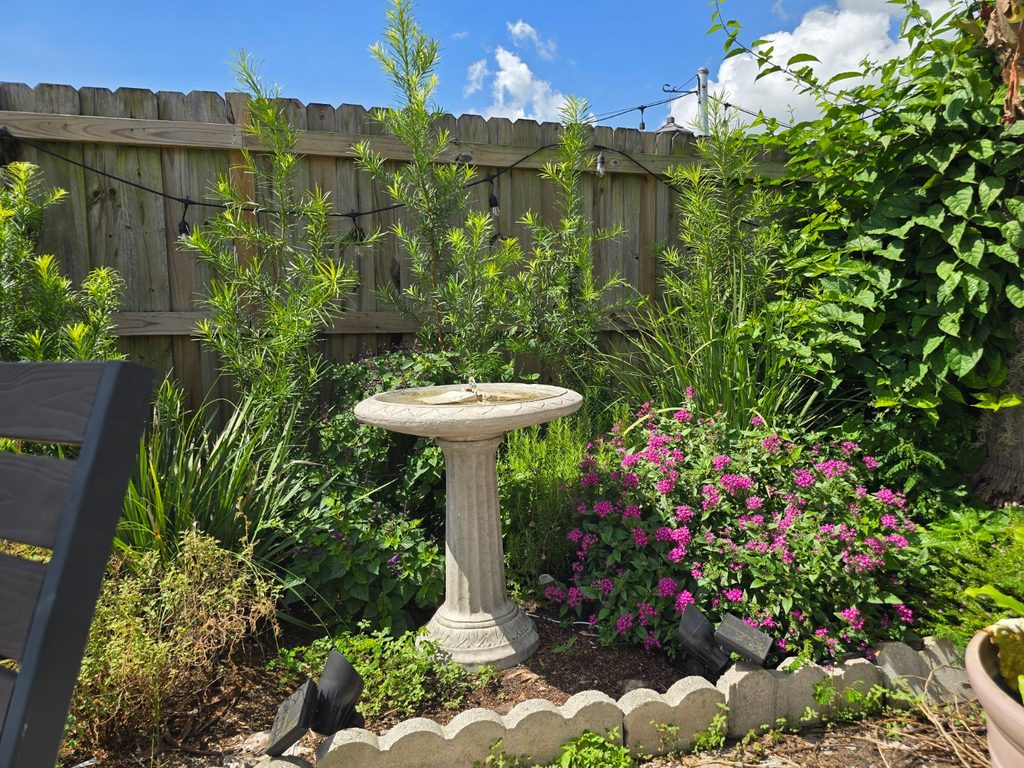
This may be the biggest lesson. My garden isn’t finished, and I don’t think I want it to be. There are areas I still want to change. I’ll probably move some plants, eventually remove others, and figure out what to do with a few empty spaces. There will absolutely be plants I buy, convinced I’ve found the perfect spot for them, only to realize a month later I was completely wrong.
That’s gardening. The garden I have now is already different from the one I had in winter and spring, and by next summer it’ll be different again — which is probably why I enjoy it so much. Something is always growing, blooming, struggling, taking over, recovering, or surprising me. And after this summer, I think I’m getting better at letting the garden tell me what it needs instead of deciding ahead of time what it’s supposed to become.
For now, I’m enjoying what worked, learning from what didn’t, and already thinking about what I want to change next.
If you enjoy seeing the real side of gardening — the successes, the rescues, the mistakes, and everything in between — follow along here on the blog. I’ll be sharing more from both my front and back gardens as they continue to grow and change.
Join Letters from Lola
New posts and seasonal ideas from my Miami home, delivered to your inbox.