How to Make a Builder-Grade Home Look Custom Without Spending a Fortune
The first thing I learned was to stop asking, “What should I buy?” and start asking, “What’s missing?”
Have you ever walked into a home and thought,
“It’s a cute house… but why doesn’t it feel special?”
That’s usually what people call builder-grade home.
Contrary to what many people think, though, it has very little to do with how much money was spent building the house. Instead, it has everything to do with layers.
Builder-grade homes usually start with simple finishes because they’re built to appeal to the widest range of buyers – flat walls, basic trim, one ceiling light in the middle of the room. As a result, everything is functional, but nothing really asks your eye to stop.
Custom homes, on the other hand, tell a different story.
They create depth, guide your eye, and make you slow down. The good news! You don’t need a major renovation to create that feeling.
Stop Decorating, Start Layering.
When I decorate a room, I don’t ask,
“What else can I buy?” Instead, I ask, “What’s missing?”
Those are two very different questions. Most rooms don’t need more decorations. They need more layers.
That might be:
- Architecture
- Lighting
- Scale
- Texture
- Contrast
Once you understand those five things, decorating becomes much easier because you’re no longer filling empty spaces—you’re creating balance.
Layer One: Architecture
One of the biggest differences between a builder-grade home and a custom home is architectural detail.
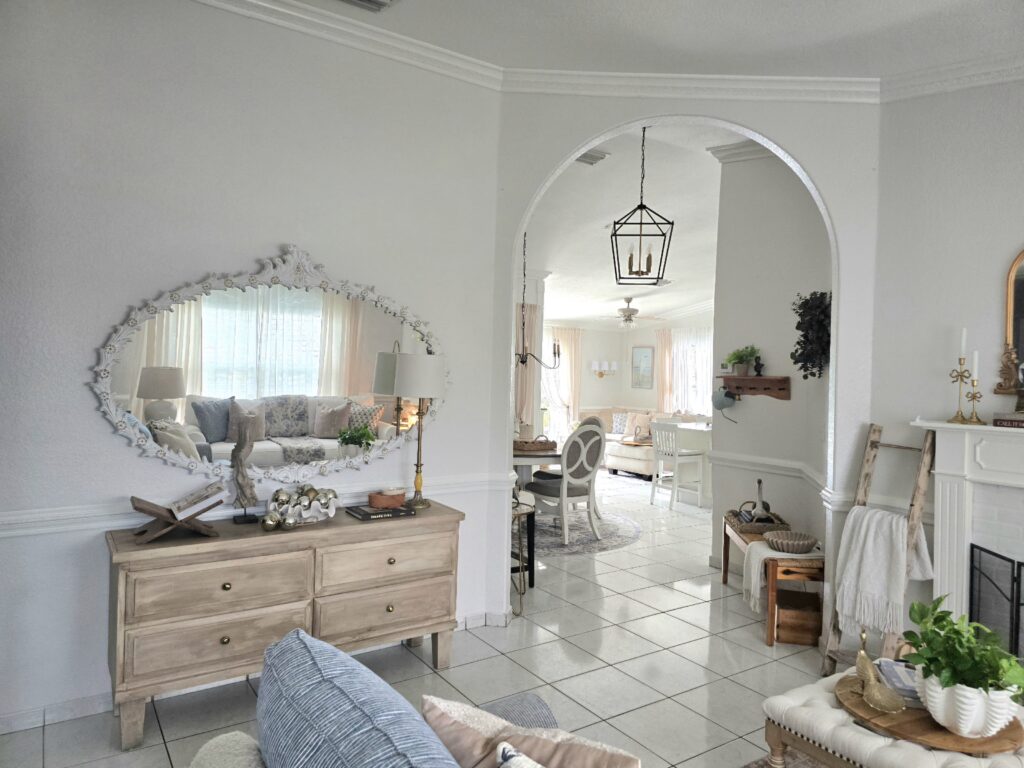
Things like crown molding, chair rails, arches, picture-frame molding, board-and-batten, wider baseboards, and substantial window casings quietly change how a room feels.
Not because they’re expensive. Because they create shadows.
Those little shadow lines give your eye somewhere to travel. That’s something people rarely notice consciously, but they definitely feel it.
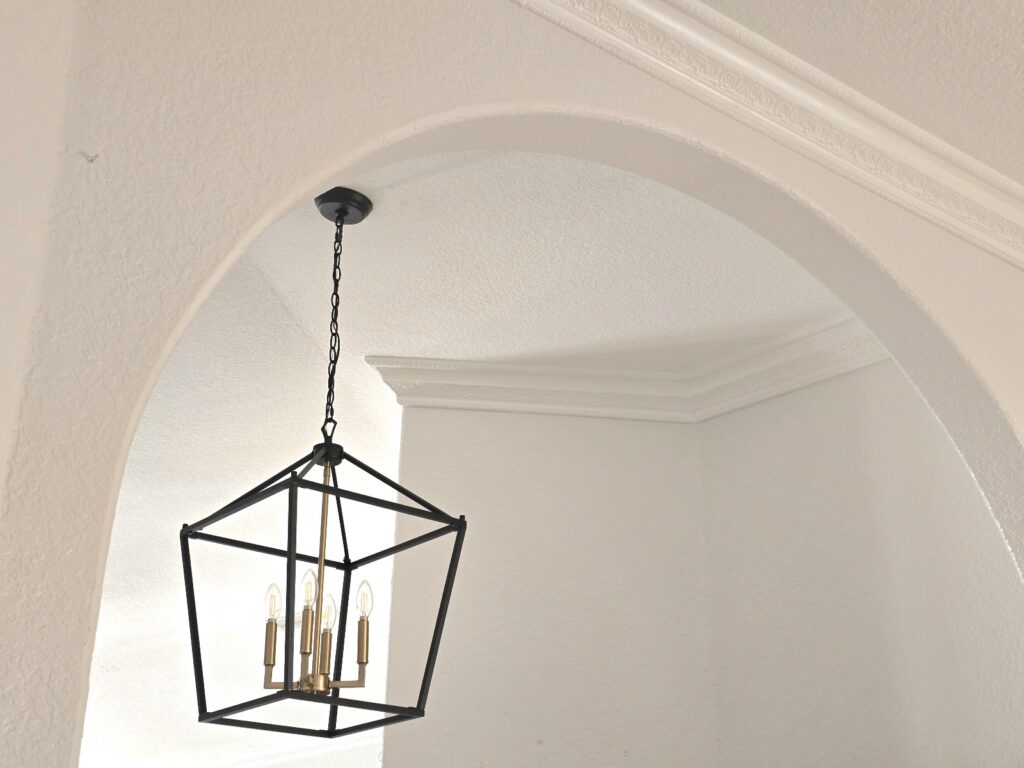
I want to mention, I didn’t install the crown molding, chair rail, or arch in my home. The previous owners did. And I’m grateful they did.
Living with these details has taught me just how much work they do. Sometimes we spend all of our energy looking at furniture and completely overlook the architecture that’s already helping the room.
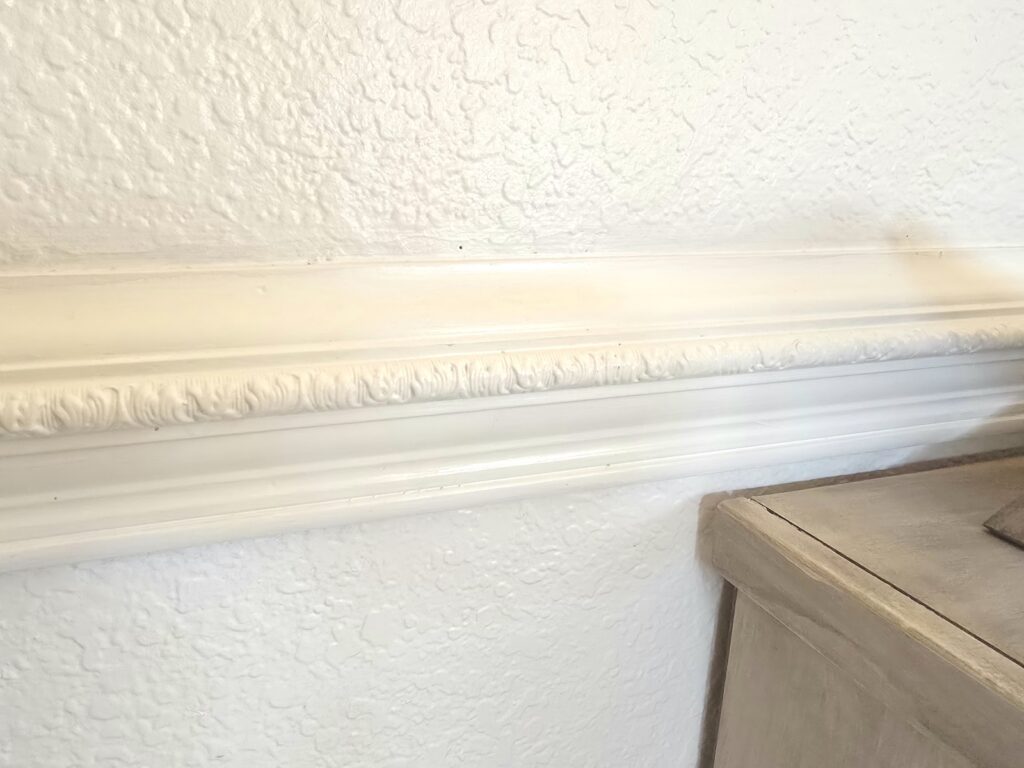
Even something as simple as a chair rail creates a natural dividing line across the wall. Instead of one large flat surface, or in my case knockdown textured walls.
Your eye now reads the room in layers. It’s subtle. But subtle details are often what separate a room that feels builder grade from one that feels thoughtfully designed.
Layer Two: Scale
A mistake I see over and over again is furniture that’s simply too small for the wall behind it. Large walls need pieces with presence. Not clutter.
Presence.
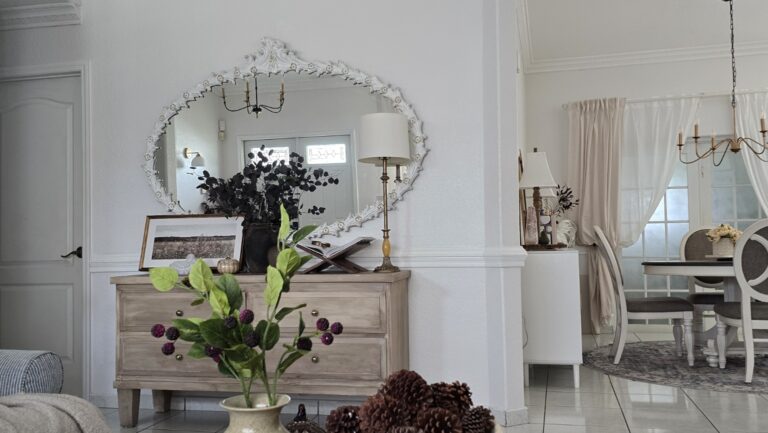
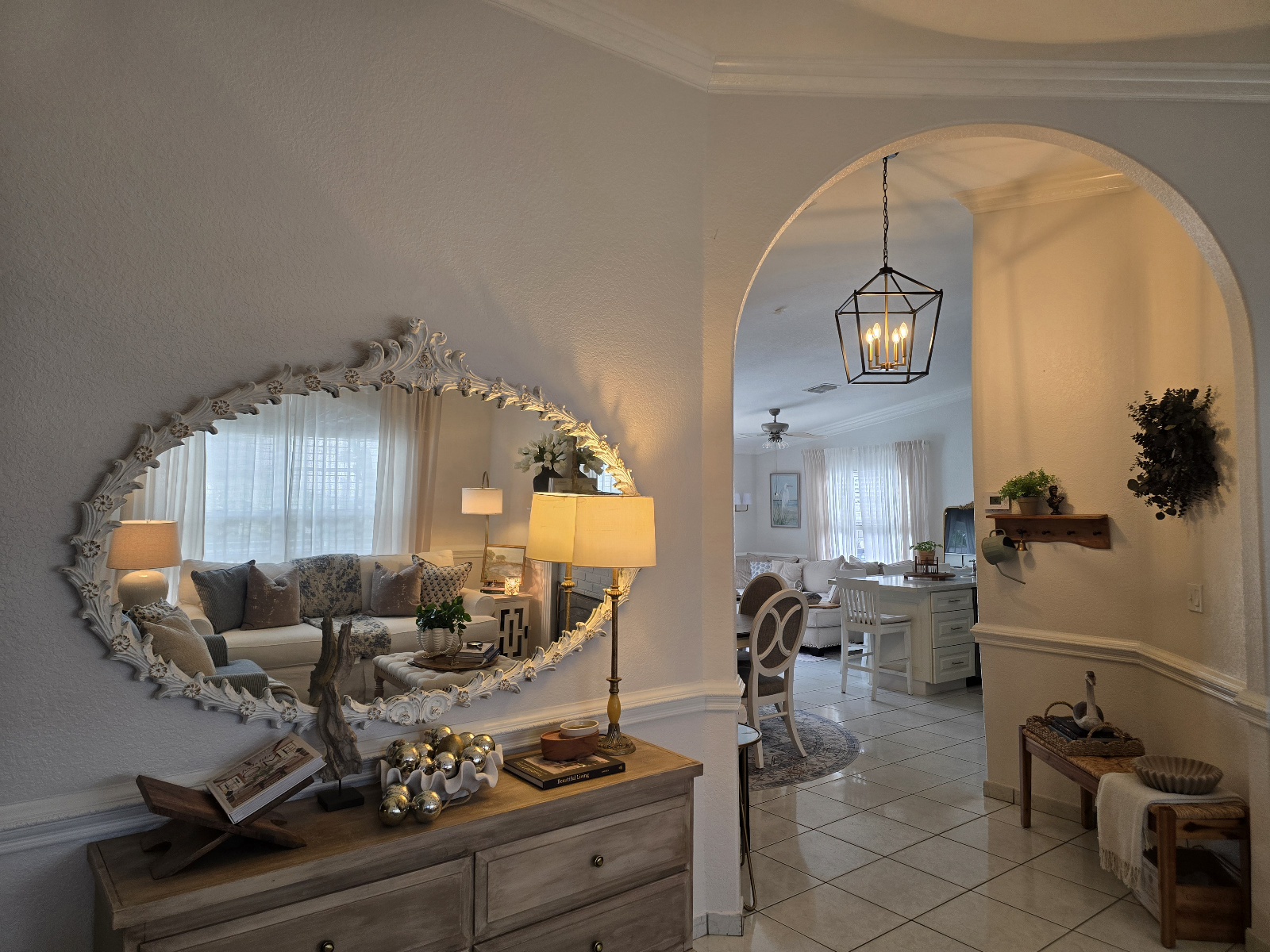
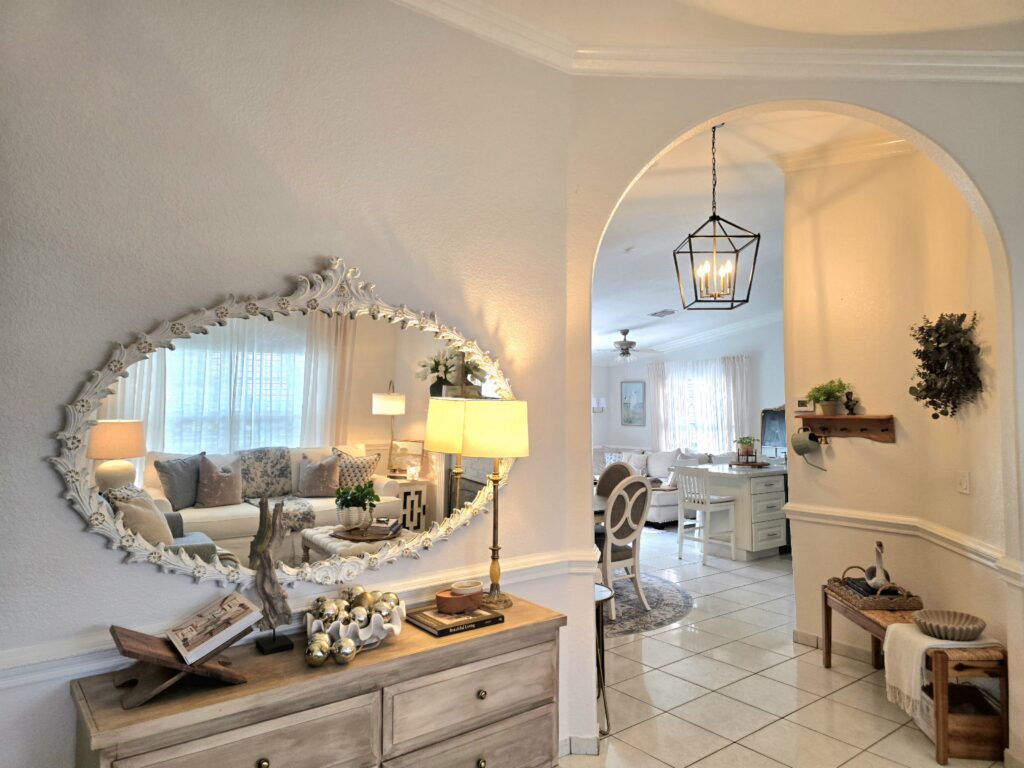
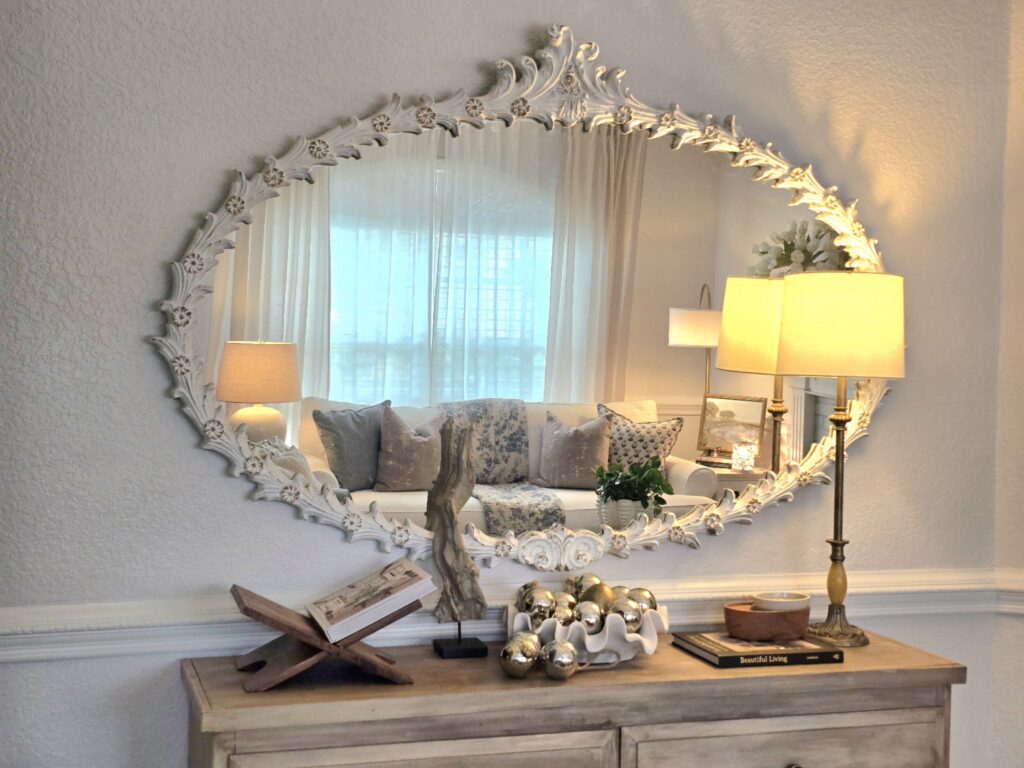
That’s one of the reasons I chose an oversized mirror over this console. First, it reflects natural light. Additionally to more light it visually expands the room. Finally, it brings another space into view.
My favorite part is something most people don’t notice. The arch naturally draws your eye upward and the mirror gently brings it back down. That movement keeps the room feeling balanced.
Layer Three: Lighting
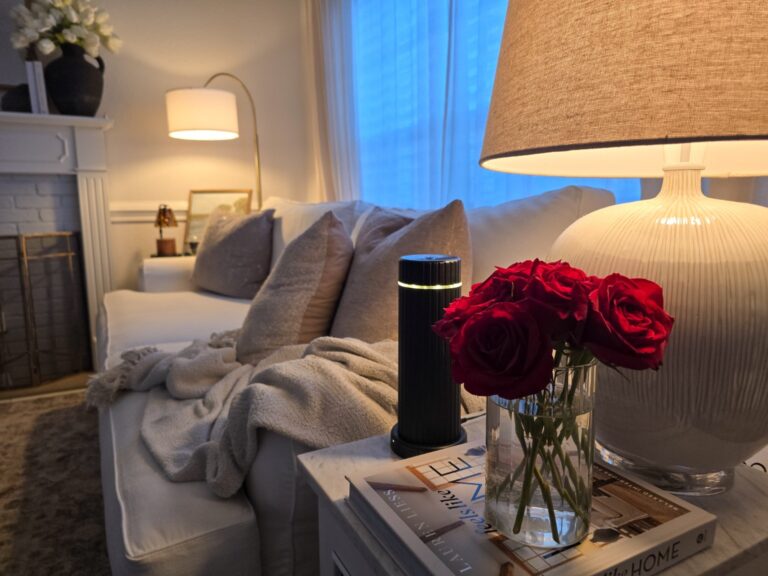
Builder grade lighting usually serves one purpose. It lets you see. Custom feeling lighting creates atmosphere. Instead of relying on a single ceiling fixture, think about layering your light.
Lamps.
Candles.
Wall sconces.
Dimmers.
Accent lighting.
Notice how different the same wall feels in the evening compared to daytime. Nothing about the architecture changed. Only the lighting did. Yet the entire mood of the room changed. That’s why I believe layered lighting is one of the highest-impact upgrades you can make without spending a fortune.
A Real-Life Example
When I first started working with this wall, my instinct was to add even more architectural detail. Picture-frame molding. Maybe board-and-batten.
Then I stopped, regrouped my thought’s and ideas.
The room already had crown molding. It already had a chair rail. And it already had an oversized arch. Instead of adding more, I decided to work with what the house was already giving me. That decision completely changed how I approached this space. Sometimes the best design decision isn’t adding something. It’s recognizing when enough is enough.
The room also presented another challenge. This wall sits beside a large arch and beneath a vaulted ceiling. It isn’t one simple rectangle.
Instead of fighting the architecture, I decided to let it lead the design. The arch naturally creates movement upward. The mirror balances that movement by bringing your eye back down toward the console. Without realizing it, the architecture was already doing half the work for me.
So I stopped competing with it.
Layered, Not Matched
You’ll probably notice throughout my home very little actually matches. That’s intentional. I don’t buy matching furniture sets. Every finish doesn’t needs to be identical. I prefer rooms that feel collected over time.
Wood.
Glass.
Metal.
Fabric.
Stone.
Each material adds another layer. To me, that’s one of the biggest differences between decorating and designing.
Layered, not matched.
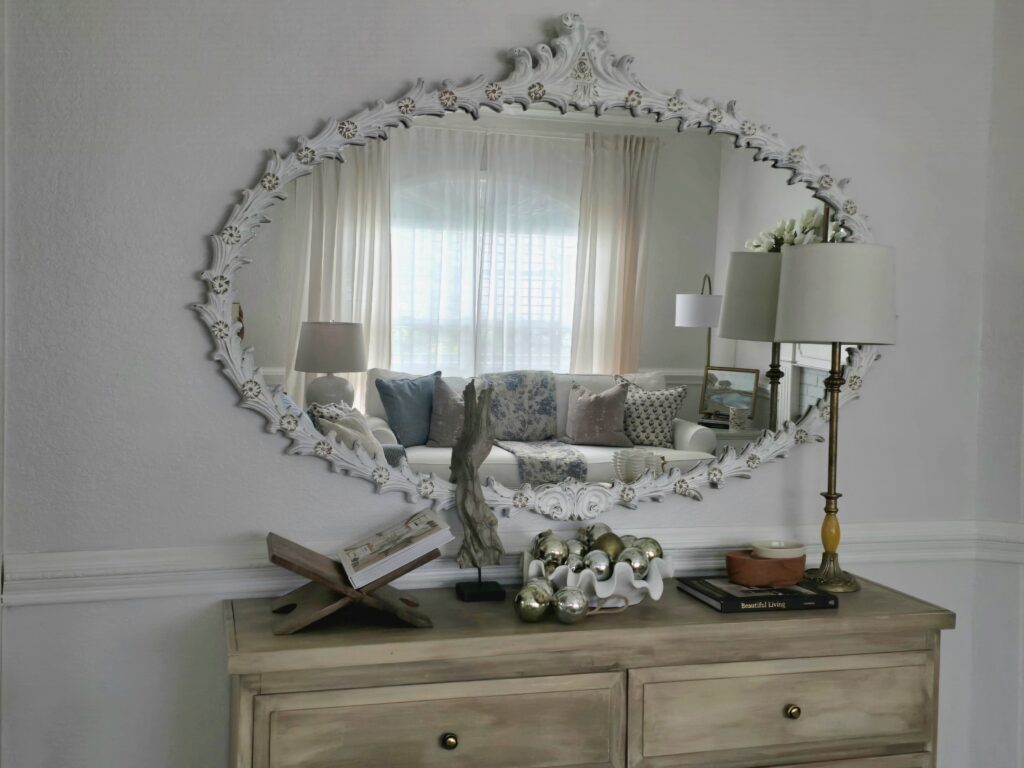
Looking at this wall during the day tells one story, the evening tells another. Neither one is better. They’re simply different. And that’s exactly what I want my home to feel like.
Alive. Comfortable. Always changing with the light.
If I Were Starting From Scratch
I would start in this order.
- Better lighting.
- Properly scaled furniture.
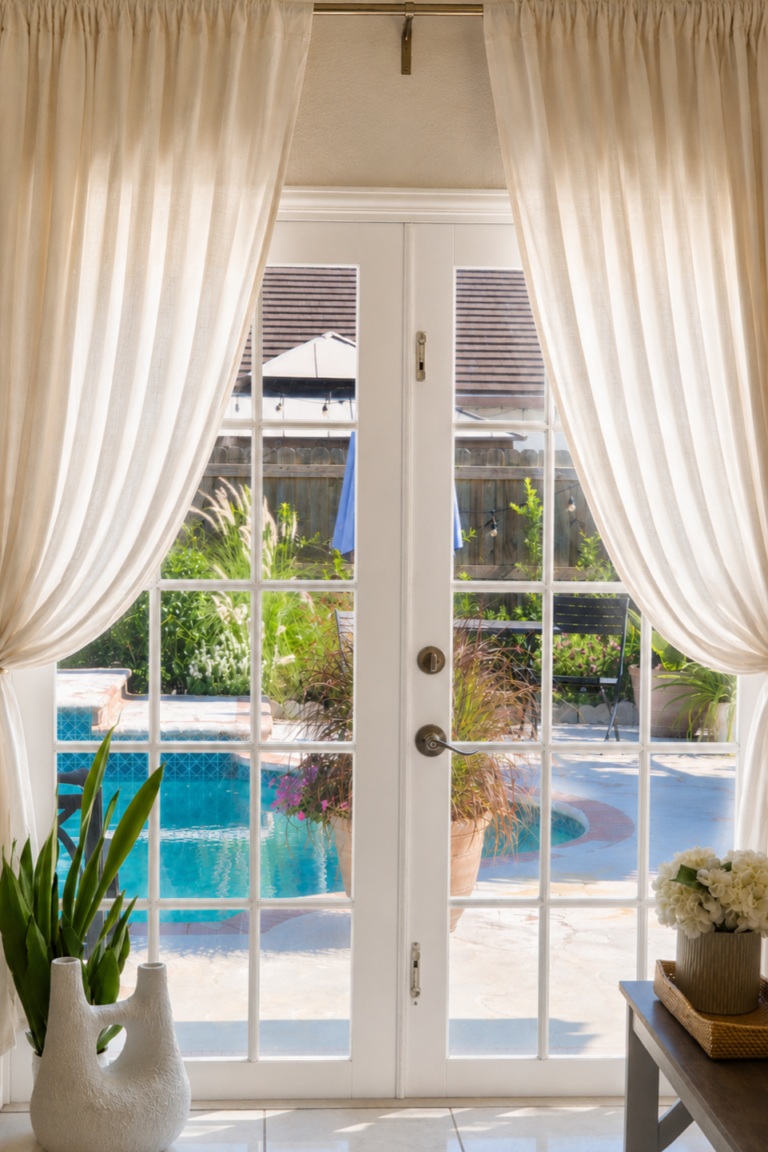
- Curtains hung high and wide.
- Architectural detail in one room.
- Thoughtful styling.
Don’t do everything at once. One intentional improvement is always better than five rushed ones.
Final Thoughts
I’ve learned something over the years. Beautiful homes aren’t created in a weekend. They’re edited.
One layer at a time. A thoughtful decision at a time. Sometimes adding something improves a room. As well as removing something can improve a room. The goal isn’t to own more. The goal is to create a home that feels like it belongs to you.
Before You Go…
I’d love for you to try something.
Go stand in one room of your house for five minutes. Don’t think about decorating. Just observe.
First, where does your eye go?
Then, where does it stop?
Meanwhile, what’s working?
Finally, what’s missing?
Sometimes the biggest transformation doesn’t begin with buying something. It begins with seeing your home differently.
Enjoy timeless home inspiration? Join my email list for decorating ideas, garden updates, and new posts.
Join Letters from Lola
New posts and seasonal ideas from my Miami home, delivered to your inbox.