How I Plan My Christmas Decor Before I Even Start Decorating
I know it’s early. At least, it’s early according to some people.
For me, Christmas decorating starts long before the actual decorations come out. By September, I’m already thinking about it—not because I’m ready to put up the tree tomorrow, but because I don’t want to wait until November, open every Christmas bin at once, and try to figure out a plan while surrounded by ornaments, ribbon, and greenery I forgot I even owned.
I’d rather have some direction first.
That doesn’t mean I reinvent my whole Christmas every year—honestly, I don’t want to. I’ve collected these decorations over the years because I love them. Some pieces come back every single Christmas. Others disappear for a year or two and suddenly feel right again.
The planning is really just about figuring out how I want it all to come together this year.
To be completely honest, I start thinking about Christmas way before September. But I don’t want to sound like the crazy Christmas lady, so we’ll pretend it’s September.
Start With What You Already Own
Before deciding what this year’s Christmas will look like, I take stock of what I already have.
Christmas decorating shouldn’t require a brand-new collection every year. I’ve built up ornaments, ribbon, greenery, and sentimental pieces over time, and that’s part of what makes the season feel special—seeing familiar things again.
So instead of immediately asking what should I buy this year?, I start by looking through what I already own.
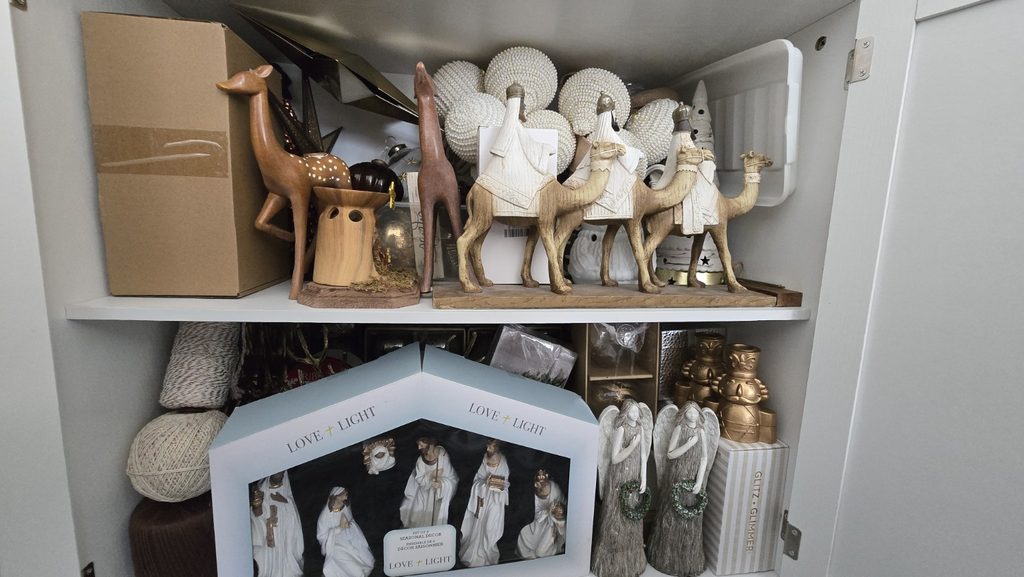
Looking through my Christmas decor helps me figure out which direction I want to go before I start buying anything new. I can see what I still love, what I haven’t used in a while, and what might work differently this year.
From there, I can decide whether I need anything new at all—and if I do, how much I want to add versus working with what I already have.
An ornament from last year’s tree might move somewhere new. Ribbon can look completely different depending on what it’s paired with. Something I haven’t touched in years might suddenly be exactly what I need.
I don’t have a rule about how much has to be old or new. I just want whatever I bring in to make sense with what I already have and with the direction I’m going that year.
Pick a Direction, Not a Theme
I’ve never loved the idea that Christmas needs a totally new theme every year. I’m much more interested in creating a feeling.
This year, I’m leaning into:
- Evergreen and warm white
- Antique gold and touches of silver
- Clear glass
- Pale dusty blue and richer tobacco-brown
I still have time to change my mind. This is where I’m starting, but we’ll see where I actually end up once the decorating begins. I’ll share it all here as the house comes together for Christmas.
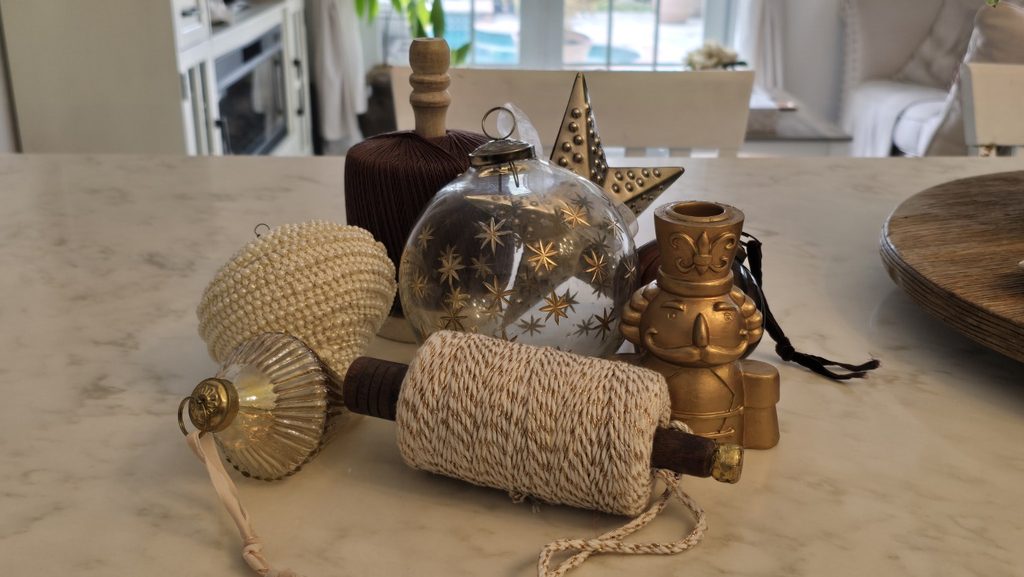
Whatever I end up choosing, I don’t need every ornament to match or come from one collection, and I definitely don’t want my house looking like I bought Christmas in one afternoon.
I want pieces to work together because they share enough color, material, or character to feel connected.
Let the Tree Set the Direction for Everything Else
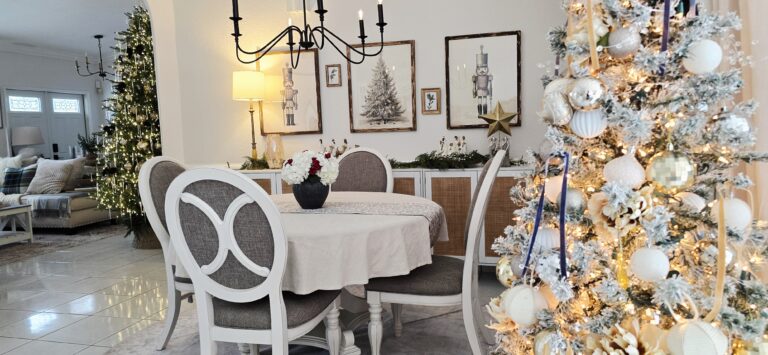
My tree is nine feet tall, so pretending it won’t dominate the room would be ridiculous.
Once it’s up, it’s one of the first things anyone sees—which means I think through the tree before making too many decisions about the rest of the house.
Before I start, I think about what colors I’m using, how much ribbon I want, which ornaments are definitely coming back, and whether I want the tree fuller and more layered or a little quieter this year.
I also think about where the metallics will go and how everything will work together once the tree is finished.
Once I have a general direction for the tree, the rest of the house comes together much more easily.
It doesn’t have to match the tree exactly, but it should feel like it belongs to the same Christmas.
Look Back at Last Year Before Planning This Year
Photos are incredibly useful here.
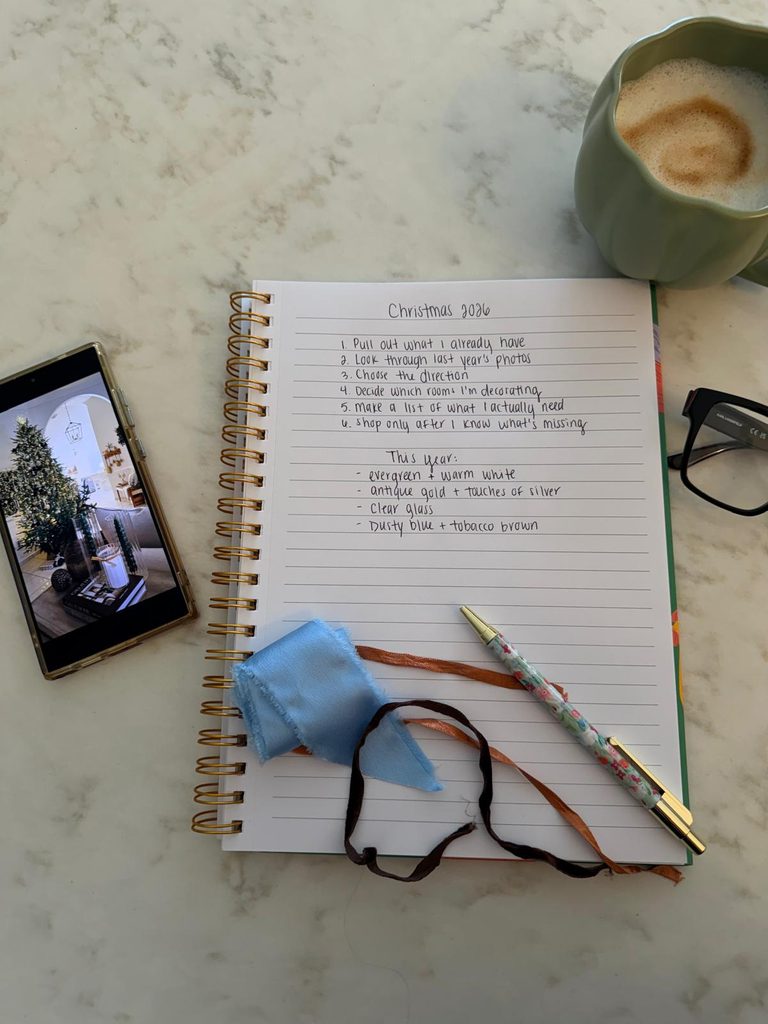
Something can look perfectly fine while I’m decorating it, and then I’ll see it in a photo later and immediately spot what I’d change—an area that was too busy, a spot that needed more height, or a corner I loved and want to recreate almost exactly.
I can also look back at what colors and decorations I used and decide whether I want to bring them back the same way, use them somewhere different, or leave them out this year.
And sometimes I look back and decide I don’t want to change a thing.
That’s allowed too.
Loving something again isn’t a design failure—it’s a tradition.
Not Every Room Gets the Same Amount of Christmas
I love decorating for Christmas, but I also have to live in my house.
The main living areas, the tree, the fireplace, the dining room, and the entry carry most of it because that’s where Christmas makes the biggest visual impact.
Other rooms get something small.
Some get nothing at all.
Covering every surface in the house doesn’t necessarily make it feel more festive. Sometimes it just makes it feel crowded.
I’d rather have a few areas that feel layered and special and let the rest of the house support them.
Work With the House You Already Have
I’m not decorating an empty house.
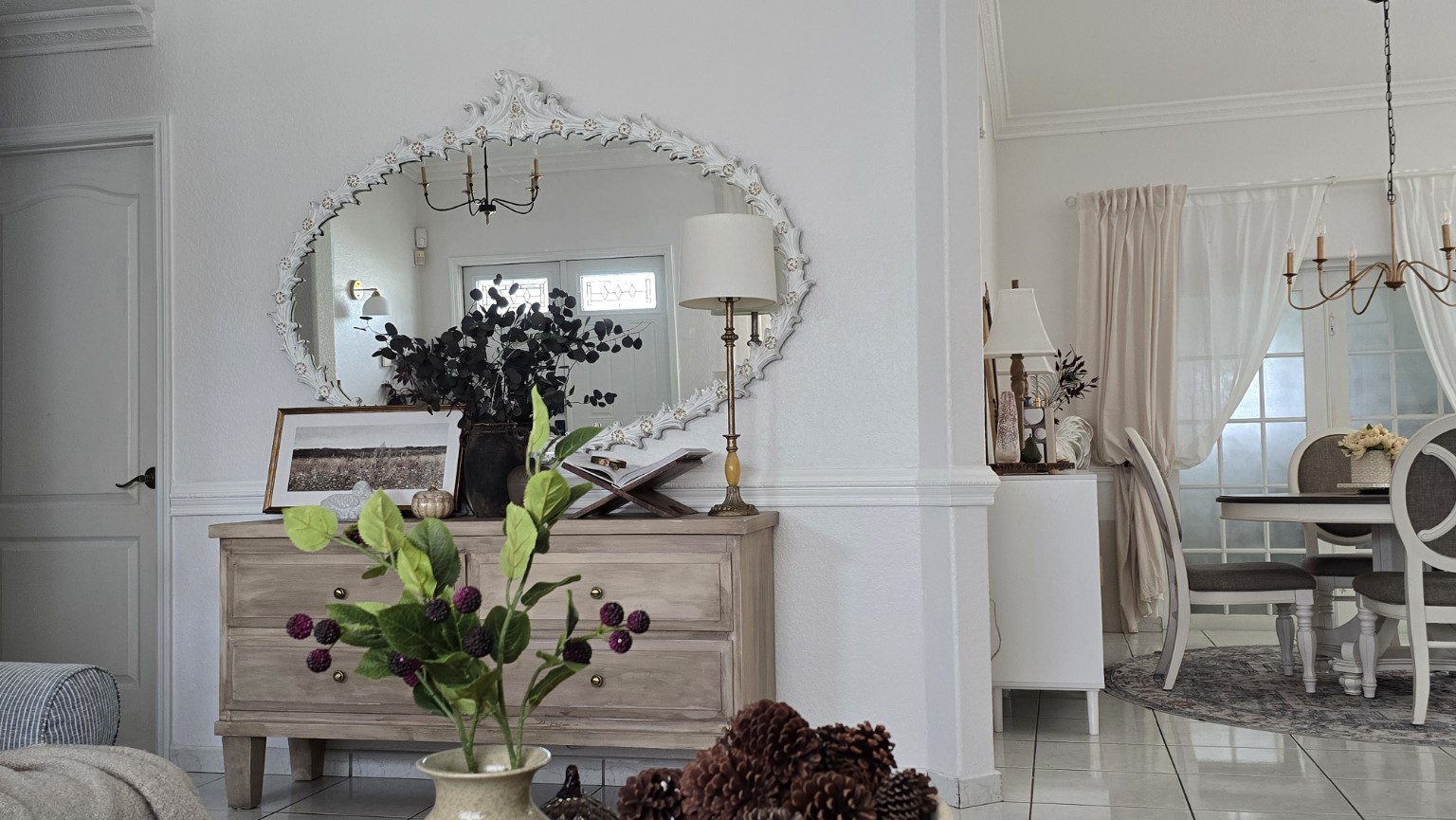
My furniture, artwork, brass, wood, black accents, creams, and whites are all still there year-round—and Christmas has to work with those things, not against them.
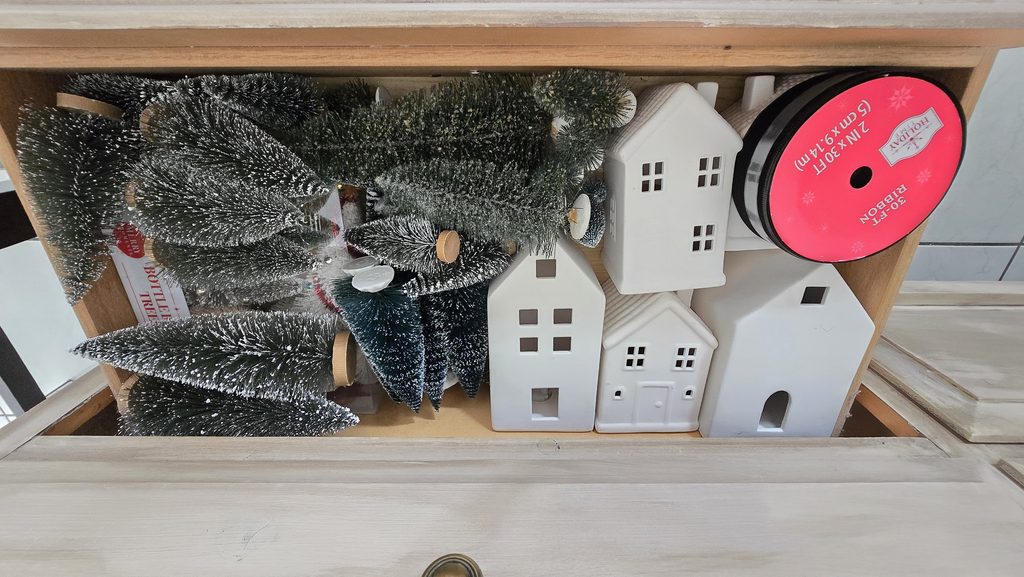
That’s part of why I keep coming back to greenery, warm metallics, glass, natural elements, and colors that already make sense in my home.
I want Christmas to transform the mood of the house without making it look like it belongs to someone else for two months.
The Christmas decorations are another layer of the home. They’re not supposed to erase it.
Figure Out What You Actually Need Before You Shop
This is where planning ahead can save real money.
Christmas displays are dangerous when you don’t know what you’re looking for. Everything looks beautiful under perfect store lighting, styled as part of an entire vignette. Then you bring one random piece home and realize you have nowhere to put it.
Ask me how I know.
That’s exactly what I’m trying to avoid by planning first. Once I’ve looked through what I already have, it’s much easier to see what I’m actually missing.
Maybe I need extra ribbon.
Maybe I’m short on greenery for one specific spot.
Maybe I need a certain size ornament to balance what I already have.
Maybe something broke last year and needs replacing.
Or maybe I realize I don’t actually need anything for a particular room.
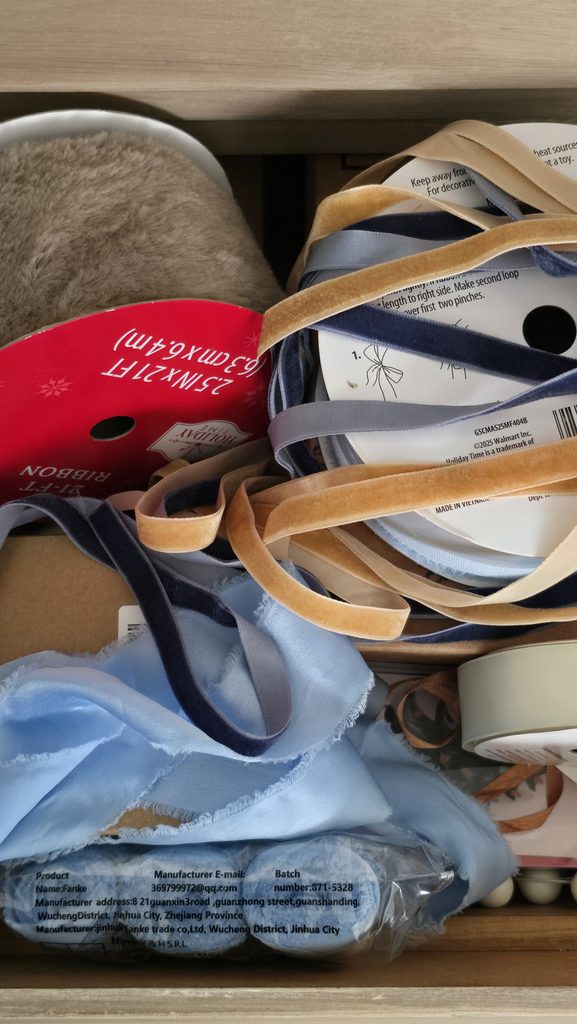
That’s very different from walking into a store and suddenly “needing” twelve new things because they look pretty together on a shelf.
I’ll still occasionally bring home something I wasn’t planning on.
I’m planning Christmas, not pretending I have superhuman self-control.
Sentimental Pieces Don’t Have to Fit the Plan
Some things come out simply because they’re Christmas.
Period.
They don’t need to coordinate with the palette or pass any kind of design test.
Christmas is one of the few times I think sentiment gets to overrule decorating.
Family ornaments, things the kids made, pieces we’ve had forever, decorations tied to a memory—those aren’t accessories in the same way everything else is.
They’re part of our Christmas, and I’ll always find a place for them.
Planning Early Means Enjoying It More Later
This is really why I start thinking about Christmas so early.
I don’t want November to arrive and feel behind before I’ve even started.
Once I begin decorating, I want to actually enjoy it: music on, bins open, rediscovering things I forgot I had, moving things around, changing my mind a dozen times, and letting the house slowly turn into Christmas.
Having a general plan doesn’t take the creativity out of that.

It just gives me somewhere to start.
And I’m almost guaranteed to change something anyway.
That’s part of the process.
Christmas Doesn’t Need to Be Reinvented Every Year
Social media can make it seem like every Christmas needs a big reveal—new theme, new colors, new ornaments, new everything.
I don’t agree.
A home should have Christmas traditions that repeat.
Ornaments you’ve seen before. Decorations your family expects to see every year. Things with history.
I can rearrange what I own, introduce a new color, retire something I’m tired of, add something beautiful I found during the year, or rethink one area completely.
But I don’t need to erase last Christmas to make this one feel special.
I’m not trying to create a Christmas display.
I’m decorating our home for Christmas.
There’s a difference.
And for me, the planning always starts long before the first ornament goes on the tree.
Follow Along
I’ll be sharing this year’s Christmas decorating as it actually happens: the tree, the rooms, what I reuse, and what I change. And probably a few ideas that looked much better in my head than they do in my house.
For now, this is the plan. We’ll see how much of it survives once the bins come out.
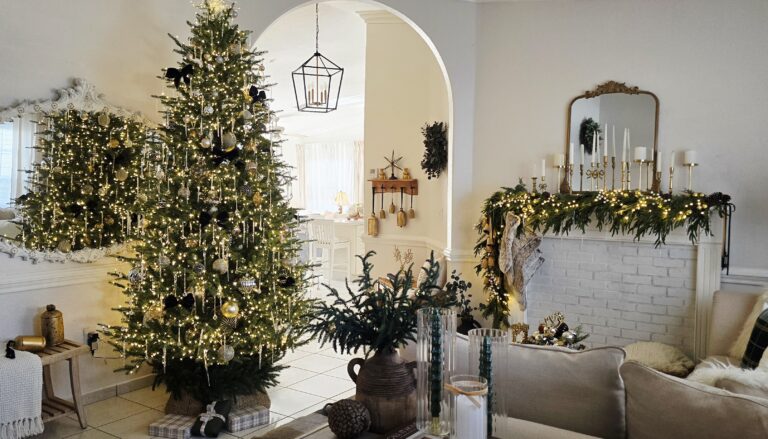
Here is last year’s Christmas; How I Plan My Christmas Decor Before I Even Start Decorating