Shop Your Own Home: How I Keep My Decor Collected (Not Cluttered)
I love having options when I decorate. I move things around throughout the year, pull pieces from one room to another, bring seasonal favorites back out, and sometimes rediscover something I haven’t used in months.
What I don’t do is pack most of it away in bins where I can’t see it.
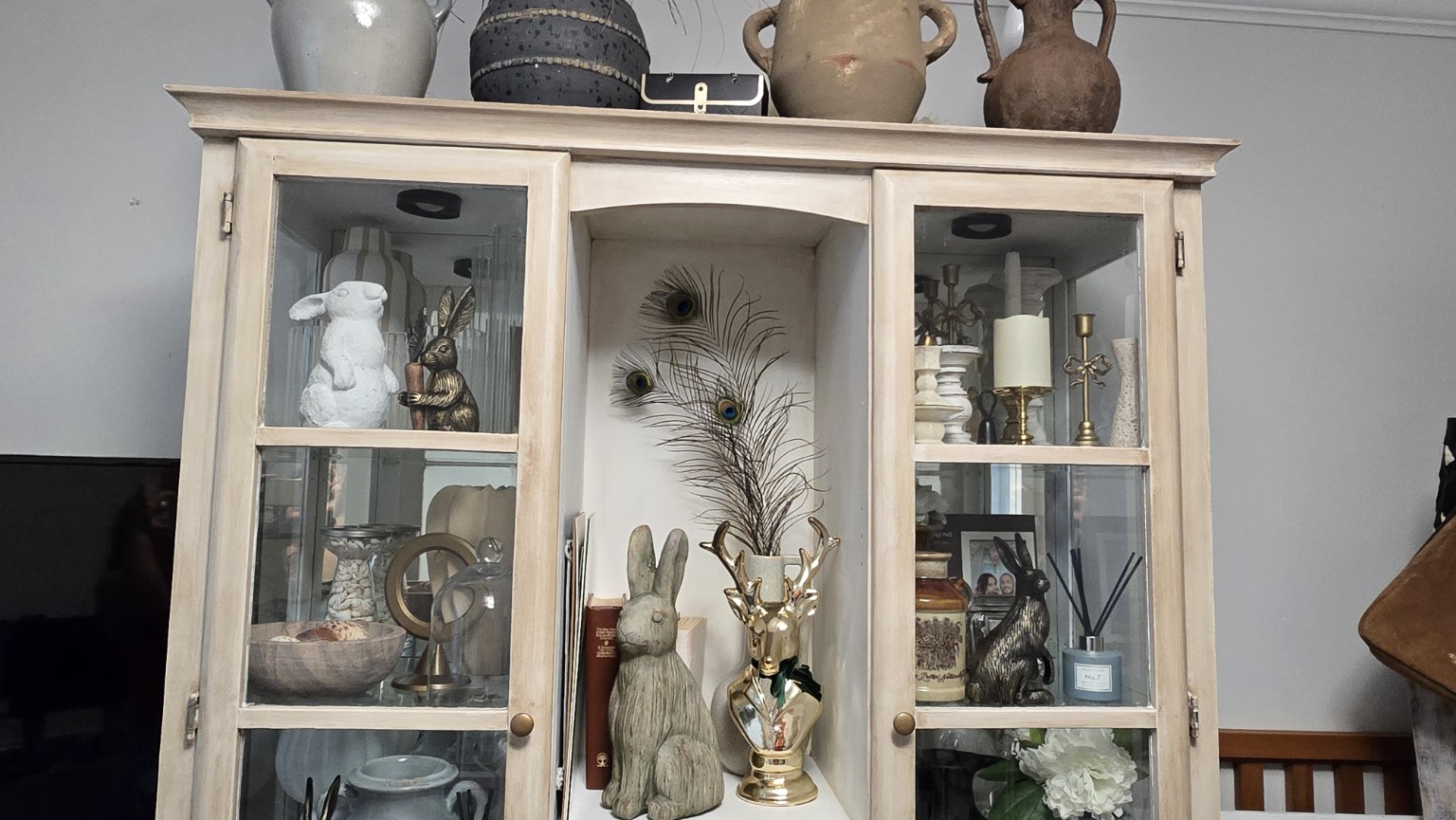
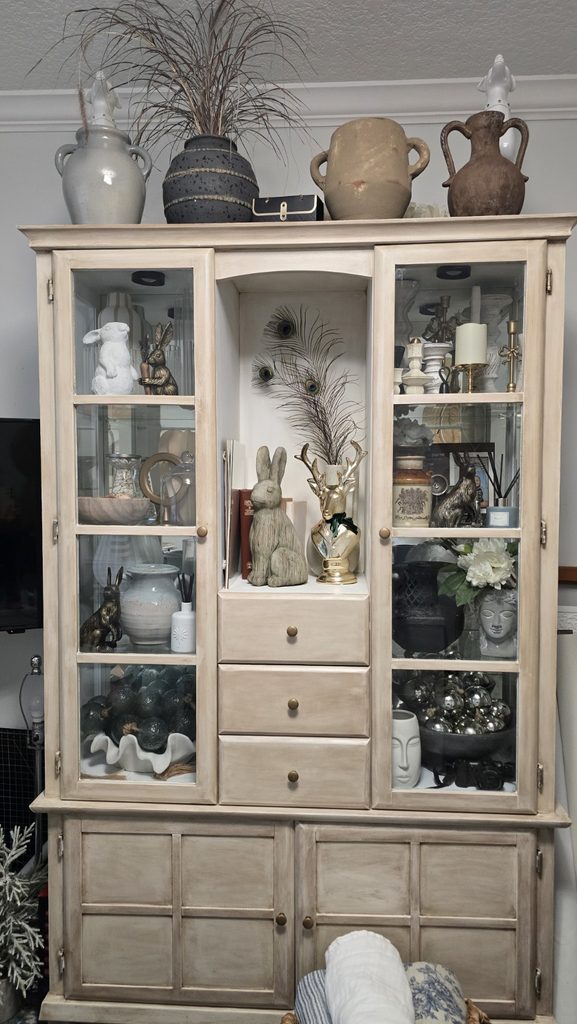
The majority of the decor I’m not currently using lives in a few designated spots: a cabinet in my office and two areas in my butler’s pantry. The catch is that none of these spaces are hidden. The cabinets have glass doors, one area is completely open, and anyone walking into either room can see what’s there.
So even though these spaces function as storage, I don’t want them to look like places where I simply shoved whatever wasn’t being used.
I still want them to feel collected, organized, and intentional.
Why I Keep My Decor Visible
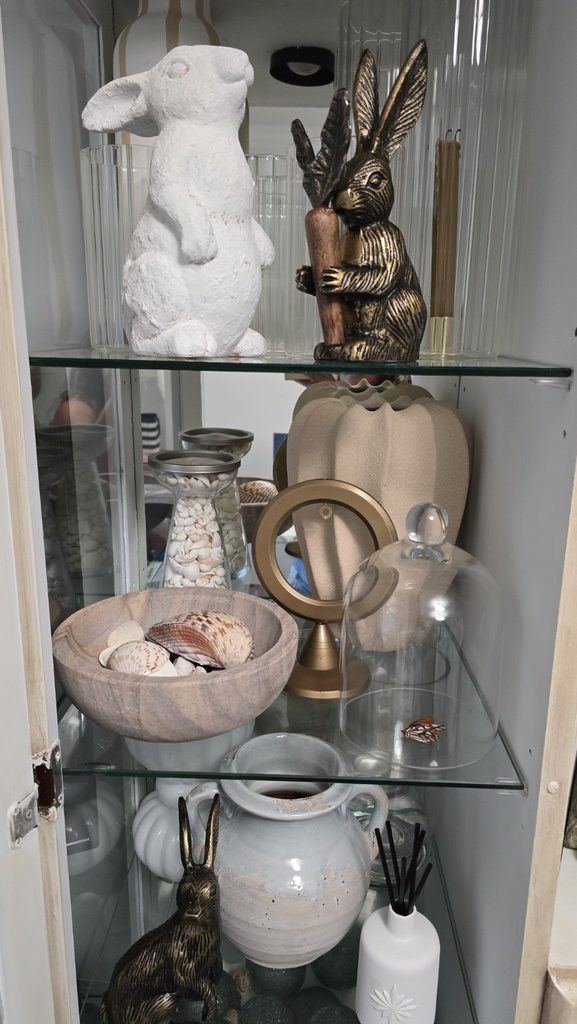
The reason is simple: if I can’t see what I own, I forget I own it.
And once something is forgotten, it becomes very easy to go shopping for another version of something I already have.
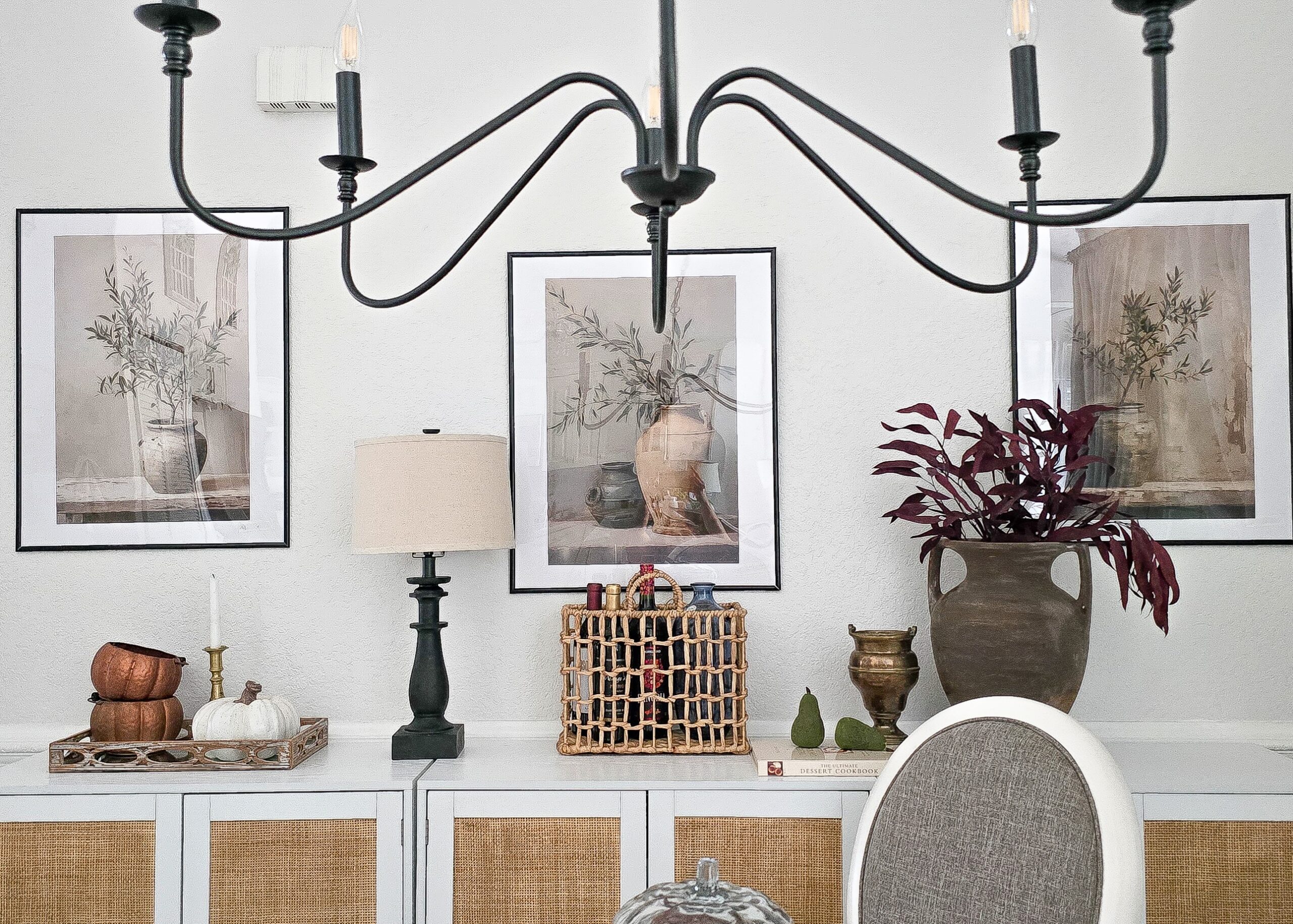
Keeping my decor visible lets me shop my own home first. That’s also a big part of how I transition my home from summer to fall without starting over—I’d rather move and reuse what I already love before assuming I need something new.
If I’m styling a console, mantel, table, or shelf and need a vessel, candlestick, ceramic piece, something brass, or a little more texture, I can walk into one of these spaces and immediately see what I have.
That makes decorating easier, but it also helps me use the pieces I already own instead of constantly feeling like I need something new.
Storage That Still Has to Look Good
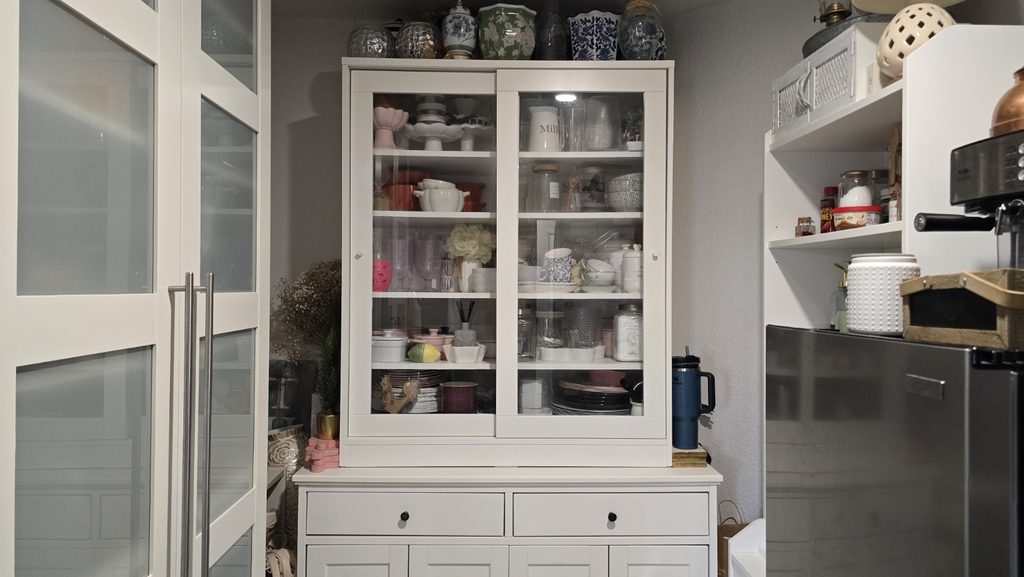
My office cabinet has glass doors, so the entire collection is visible the moment you walk into the room.
My butler’s pantry works the same way. One cabinet is glass-fronted, and another storage nook is completely open. If you’re standing there making coffee or looking for something, you’re going to see everything on those shelves.
Because of that, I treat these areas more like working displays than hidden storage.
They don’t have to look perfectly styled every day of the year, but they do need to make visual sense.
I want to see a collection of things I enjoy, not a pile of things I couldn’t find another place for.
My System Is Mostly Visual
I don’t use labels, complicated categories, or a detailed inventory.
I organize by eye.
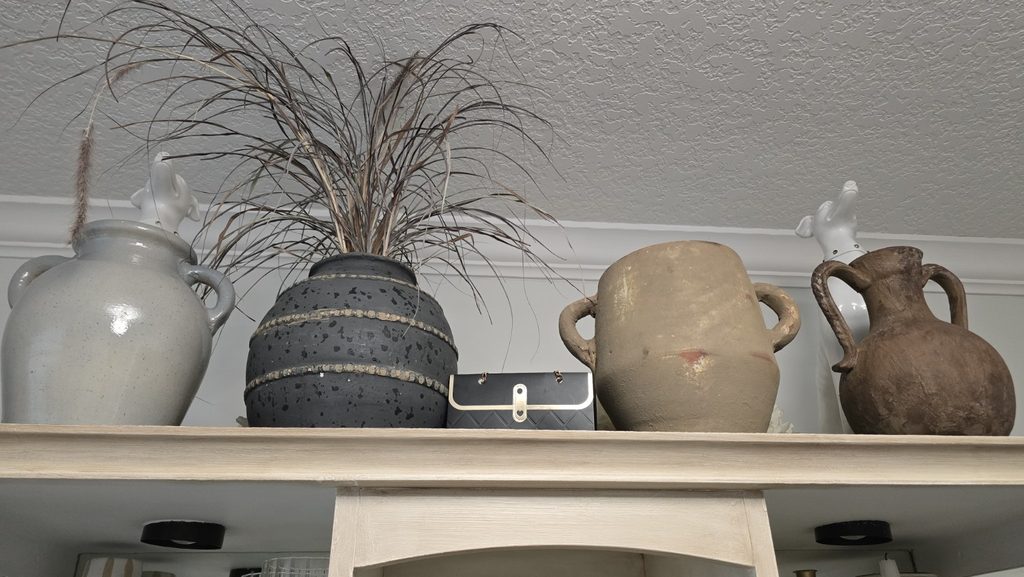
Generally, I keep similar things near each other:
- Glass with glass
- Pottery with pottery
- Candlesticks grouped together
- Wood and other warm natural materials near one another
- Seasonal pieces close to the items I’m likely to use with them
Sometimes I organize more by color than category. Other times it’s simply about scale and what looks right together.
The goal isn’t perfection.
It’s being able to glance at a shelf and understand what’s there without everything competing for attention at once.
Sometimes It Gets Messy
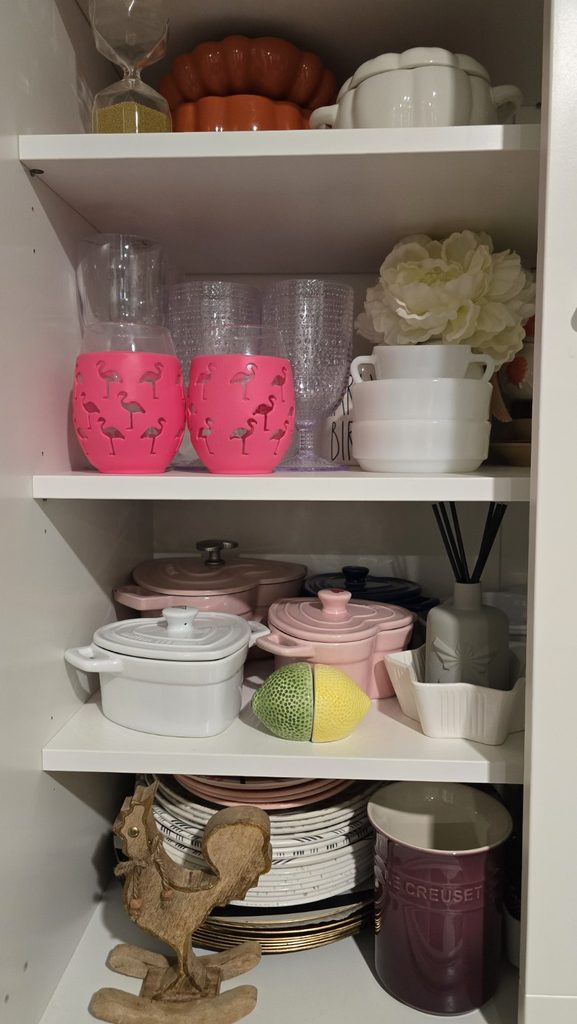
These spaces do not stay perfectly organized all the time.
Right now is a good example.
I’ve been going back and forth with fall decorating, pulling things out, changing my mind, putting other pieces back, and moving items from one spot to another.
That back-and-forth is part of decorating seasonally in South Florida Does Miami Have Fall? Living Seasonally in South Florida When It’s Still 90 Degrees, where the calendar says fall long before the weather does.
That is usually when the shelves start to unravel.
Something comes off a console and lands on an open shelf temporarily. Another piece gets pulled out because I think I might use it. Then something else gets moved to make room.
Before long, “temporary” starts looking permanent.
That’s usually my cue to stop and reset everything.
I put pieces back where they make sense, regroup similar items, rearrange anything making the shelves feel unnecessarily chaotic, and bring some order back to the space.
Because once everything starts looking shoved onto a shelf, it stops feeling collected.
It just looks like storage.
And not the good kind.
Collected and Cluttered Are Not the Same Thing
I like collected spaces.
I like pottery, vessels, glass, candlesticks, decorative objects, seasonal pieces, and things I’ve picked up over time.
What I don’t like is visual chaos.
For me, the difference between a collection and simply having too much stuff in one place usually comes down to editing and grouping.
If several smaller pieces are together, I try to create some relationship between them instead of scattering them randomly.
If a shelf already has a few visually heavy pieces, I give them more breathing room.
If everything is sitting at the same height, I vary it.
If too many unrelated colors are fighting with one another, I rearrange until the shelf feels calmer.
These are still functional storage areas. I’m not trying to turn every shelf into a magazine-ready vignette.
But because the shelves are visible, I want them to look like a decision was made, not an accident.
You Don’t Have to Display Everything at Once
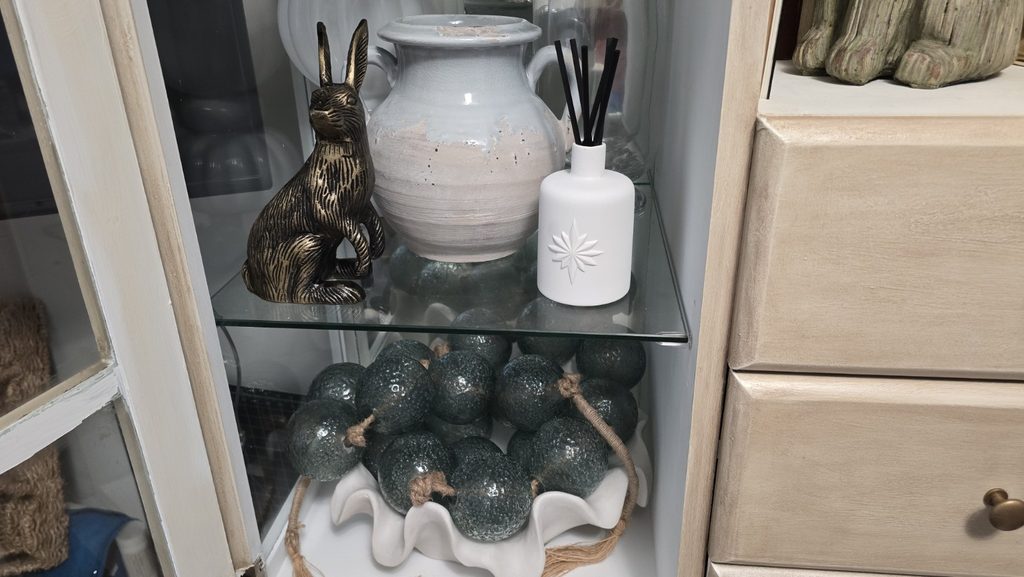
This is probably the biggest reason the system works for me.
I like my home to feel layered and collected, but I do not want every decorative object I own displayed throughout the house at the same time.
That would be too much.
So I rotate. That same approach is part of how I transition my home from summer to fall without starting over—small changes, familiar pieces, and a little editing instead of replacing everything at once.
A vase might sit in the office cabinet for six months and then suddenly become exactly what I want on the dining table.
A brass candlestick might move from the shelf to the mantel.
A ceramic piece I haven’t touched since spring might suddenly work perfectly with something I’m doing in fall.
I don’t have to use something constantly for it to deserve a place in my home.
If I still like it, still see myself reaching for it, and know it works with the way I decorate, it stays in rotation.
Shop Your Own Home Before Buying More
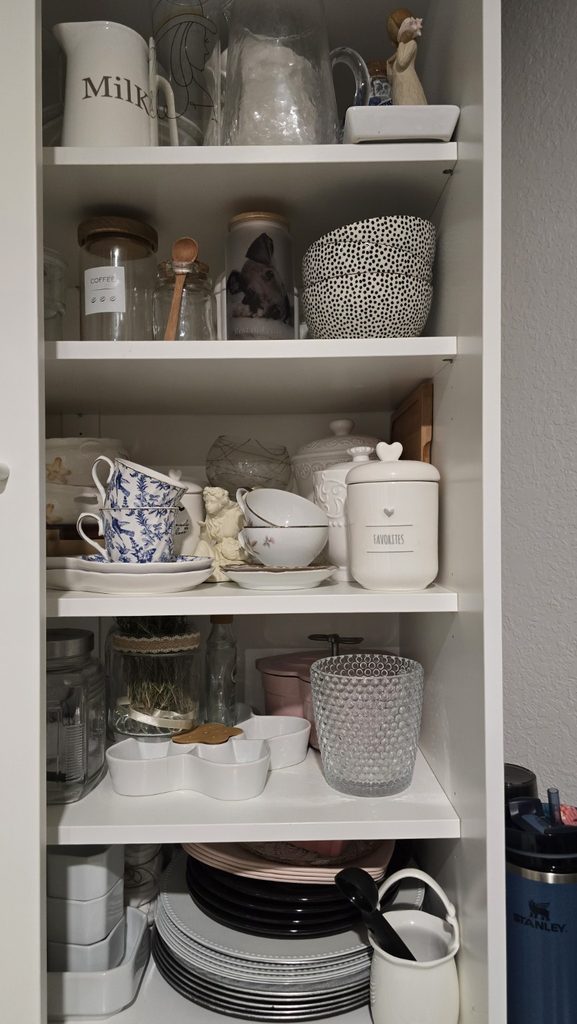
This is probably the biggest benefit of keeping everything visible.
Before I go looking for something new, I can walk through these spaces and see whether I already own something that will work.
Sometimes I find exactly what I need.
Sometimes I rediscover something I had completely forgotten about.
And sometimes I still decide I want something new.
But at least I’m making that decision knowing what I already have.
That feels very different from continuously buying because everything else is packed away and out of sight.
Organized, Not Perfect
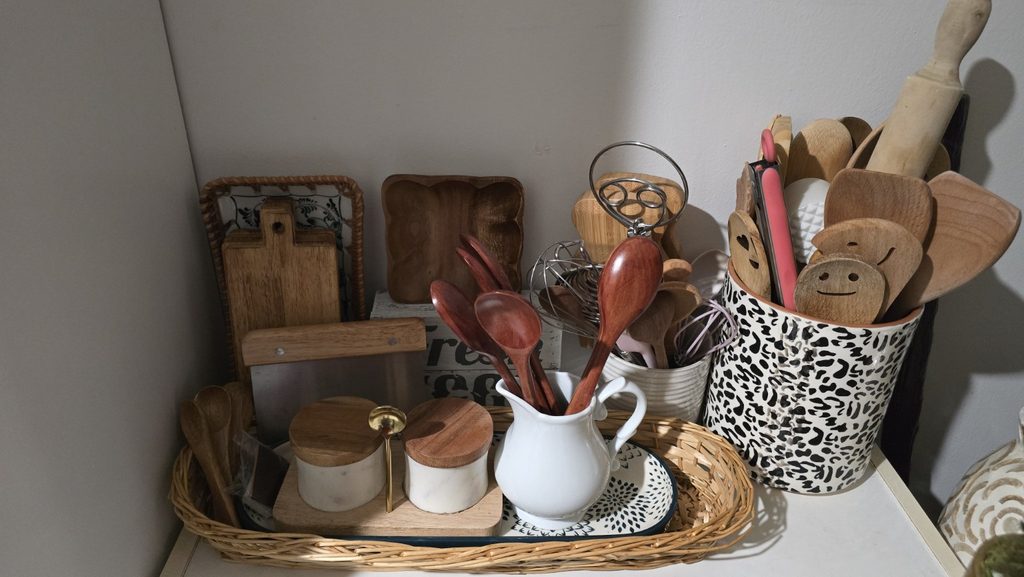
Decorative storage does not need to look like a showroom.
Mine certainly doesn’t all the time.
These spaces get used. Things move in and out. Seasonal changes create temporary messes. Sometimes I put something somewhere because I’m in a hurry and come back later to deal with it properly.
But I always come back and reset.
Because even though these areas function as storage, they are still visible parts of my home.
I want to walk into my office or butler’s pantry and see pieces I love arranged in a way that feels intentional—not shelves that look like they became a dumping ground.
For me, that is the balance.
I can collect beautiful things without displaying every single one at once.
I can keep them accessible without hiding them away.
And I can make these spaces work hard while still looking like they belong in the room.
If you enjoy following along as I decorate, rearrange, and find new ways to use what I already own, there’s plenty more of that around here. My home is always evolving a little — sometimes with something new, but often just by moving an old favorite into a different spot and seeing it with fresh eyes.
I hope this gives you a little inspiration to look through what you already have before assuming you need something new. Sometimes the best piece for a room is already sitting on a shelf somewhere in your own home.