10 Decorating Mistakes That Make a Home Look Cheap (And How I Fixed Them)
For years, I couldn’t figure out why some rooms felt finished while others didn’t. The furniture wasn’t always better. The houses weren’t always bigger. The budgets weren’t bigger either. Eventually, I realized I’d been asking the wrong question. Instead of asking, “What should I buy next?” I should have been asking, “What’s keeping this room from feeling finished?”
The funny thing is, I used to think that feeling came from money. It doesn’t. It comes from paying attention to the details.
My home isn’t some custom-built luxury home. It’s a builder-grade house in South Florida, just like thousands of others. I didn’t get here by chasing every decorating trend on social media — “I got here by making one intentional decision after another.” Some of those decisions cost money. Many of them didn’t. More than anything, I learned what not to do.
Over the years, I stopped decorating just because something was popular and started looking at my home differently. Once I began paying attention to proportion, lighting, texture, scale, and architecture, everything changed.
If you’re trying to make your home feel more custom without draining your savings account, these are the ten mistakes I made — or see all the time — and exactly how I’d fix them.
1. Buying Furniture That’s Too Small
This one gets almost everyone. We measure a room and buy furniture that technically fits the space. But fitting the room and matching the scale of the room are two completely different things.
People are usually afraid that larger furniture will make a room feel smaller. Ironically, it’s the opposite — a few undersized pieces scattered around a room just make your eye bounce from one object to the next instead of taking in the whole space at once. Something feels off, even if you can’t quite explain why.
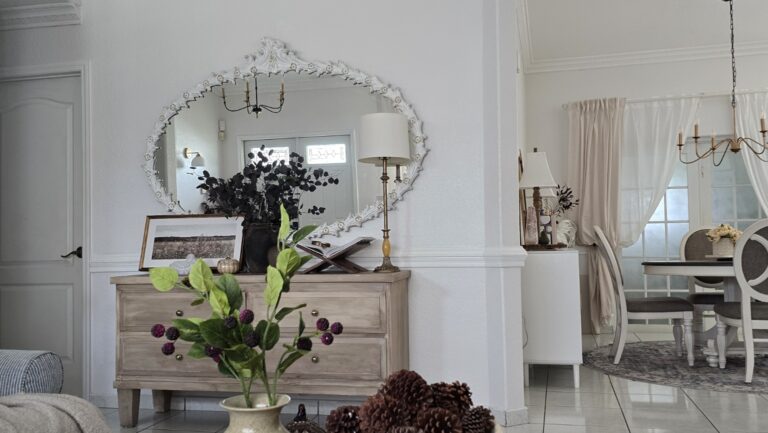
I almost made this mistake in my own entryway. I was looking at a small console table because it felt like the “safe” choice. Thank goodness I didn’t buy it — against that big wall, it would’ve looked completely lost. Going bigger gave the wall something to anchor to, and suddenly everything I put on top of it looked intentional instead of random.
The same idea applies to your sofa, your coffee table, your dining table, even your lamps. If a piece looks like it’s floating by itself, it’s probably too small.
Decor Tip: Don’t decorate according to measurements alone. Decorate according to proportion.
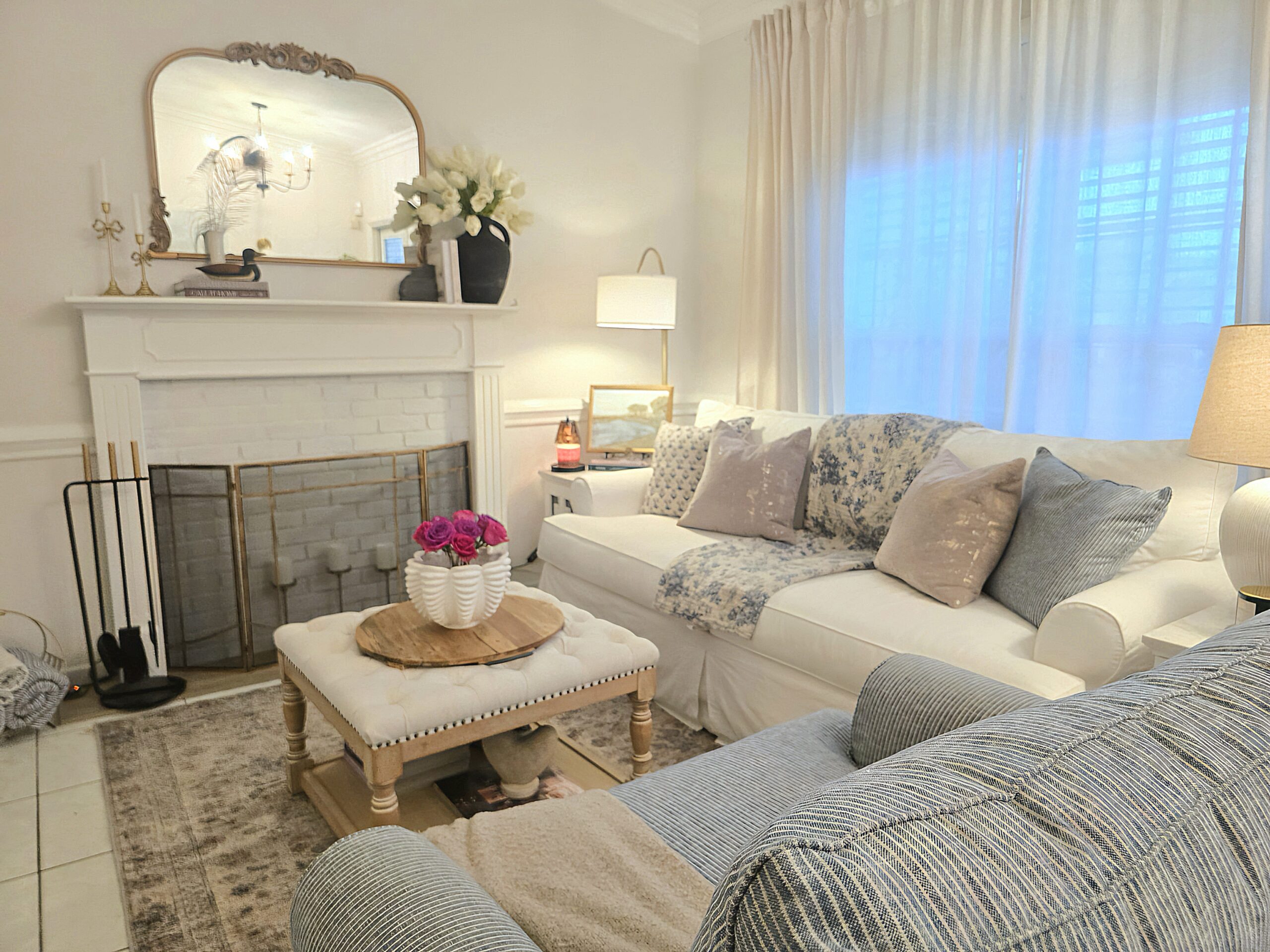
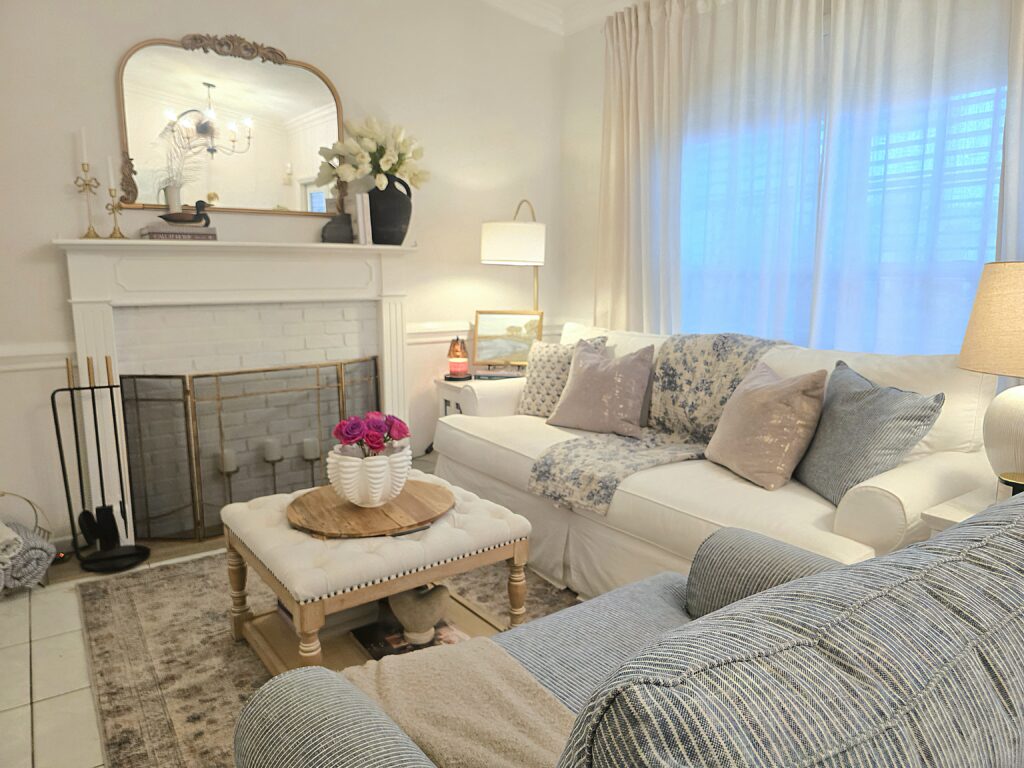
2. Hanging Curtains Too Low
This might be the least expensive change on this entire list — and one of the most dramatic.
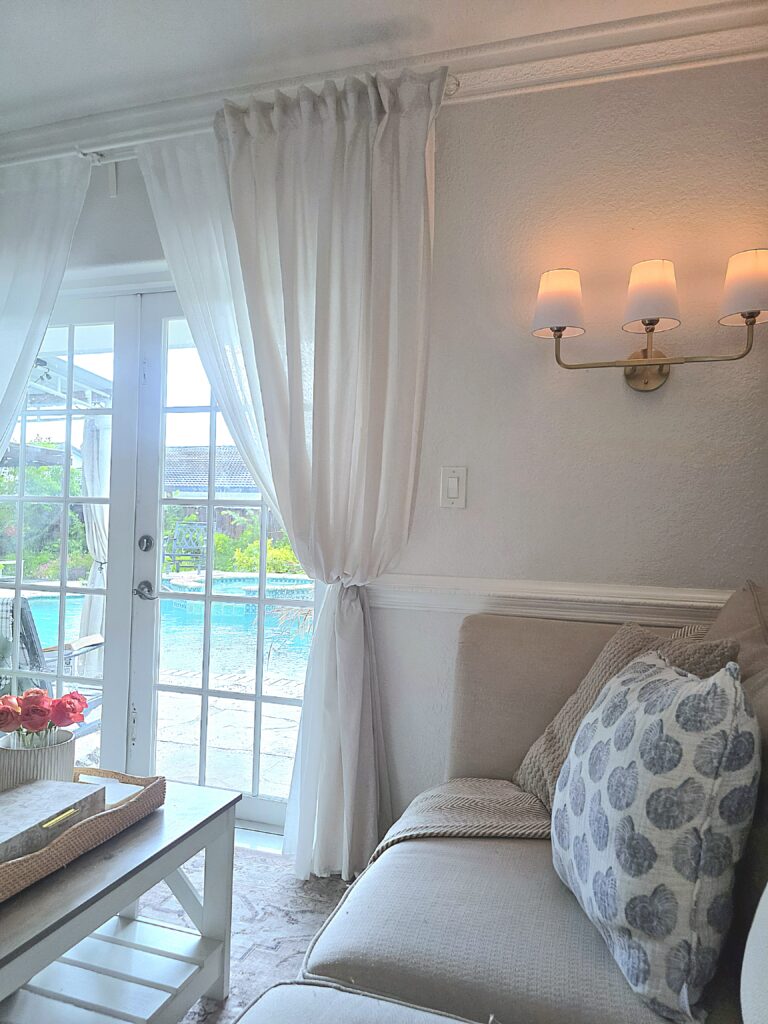
Most people hang their curtain rod a few inches above the window, because that’s where the window ends. I stopped thinking about the window a while ago. Now I think about the wall — the wall is the canvas.
Hang your curtains higher and your eye naturally travels upward, making the room feel taller and more elegant. The ceiling didn’t change. Your perception did.
Width matters just as much. When curtains are open, they should frame the window, not block half of it. Natural light is one of the most beautiful things your home already has — why hide it?
One thing I’ve noticed after years of decorating: expensive-looking homes usually aren’t filled with expensive things. They’re filled with quiet, thoughtful decisions that work together. Curtains happen to be one of the easiest ones to get right.
Decor Tip: Hang your curtain rod as high as your room comfortably allows — not just a few inches above the window.
3. Using Rugs That Are Too Small
If I had to pick one decorating mistake that instantly makes a room feel less expensive, this would probably be it.
A rug isn’t just there to keep your feet warm. It’s the foundation of the room, and when the foundation feels wrong, everything sitting on top of it feels a little off — even if you can’t immediately say why. I’ve rearranged entire rooms before, convinced something still wasn’t working. The rug was almost always the answer.
In most living rooms, at least the front legs of your furniture should sit on the rug. Even better, size up enough to anchor the whole seating area. Same rule in the dining room — pull a chair out, and if it catches on the edge of the rug, the rug’s too small.
I know larger rugs aren’t cheap. But if someone asked me whether to spend money on new furniture or a new rug, I’d tell them to buy the rug first. One properly sized rug can transform a room without changing anything else in it.
Decor Tip: Don’t ask whether the rug fits your furniture. Ask whether it connects your furniture into one complete room.
4. Relying on One Overhead Light
Have you ever walked into a beautifully decorated room that somehow still felt cold? Most people blame the furniture. I blame the lighting.
I used to think lighting was simply about brightness. Now I think about atmosphere. One ceiling light in the middle of a room rarely creates that — it flattens everything, throws harsh shadows, and lights every part of the room exactly the same way.
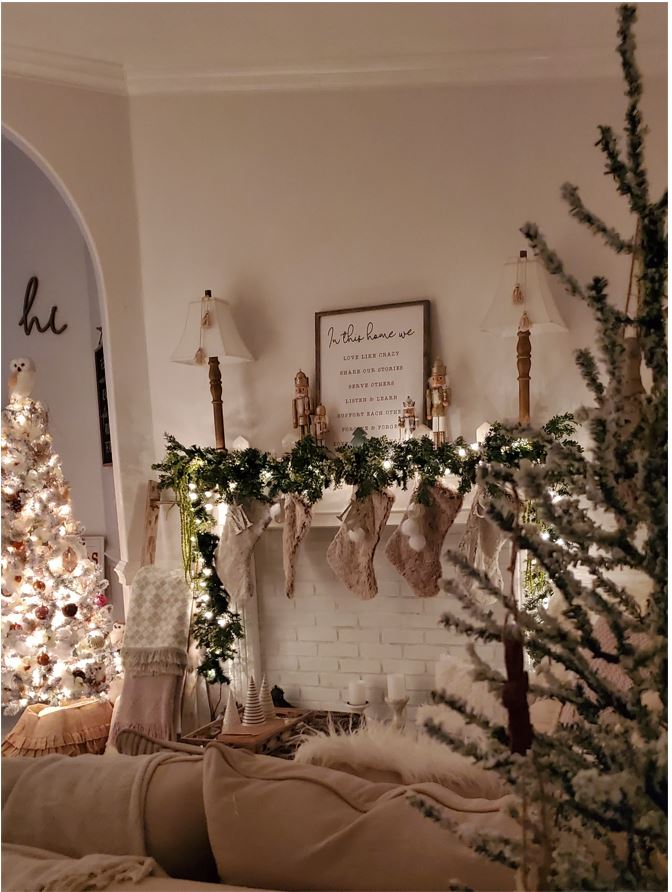
Homes that feel luxurious usually don’t have brighter lighting. They have layered lighting: a table lamp, a wall sconce, some accent lighting, candles in the evening. Different sources create depth and warmth in a way one fixture never can.
When I’m decorating a room, I don’t just think about how it looks at two in the afternoon. I think about how it feels at nine at night, because that’s usually when we’re actually enjoying our homes. Warm lighting invites people to stay — that’s something I never overlook anymore.
Decor Tip: Instead of making one light brighter, add another source of warm light somewhere else in the room.
5. Leaving Walls Bare… or Filling Every Inch
This mistake goes in two opposite directions. Some people leave every wall empty because they’re afraid of getting it wrong. Others hang something on every available inch because they assume every wall needs decorating. Neither is the answer.
Before I hang anything, I ask myself one question: what is this wall supposed to do? Sometimes it’s there to create a focal point. Sometimes it’s there simply to let your eyes rest. Every room needs both.
When a wall has a mirror, a sign, floating shelves, family photos, and artwork all competing for attention, your brain doesn’t know where to look first, and the room starts feeling busy instead of beautiful. On the other hand, a giant blank wall left completely untouched can feel just as unfinished.
One oversized mirror or a single large piece of artwork can do more for a room than five smaller pieces ever could. I’ve learned that decorating isn’t about filling space — it’s about creating intention. Negative space isn’t empty. It’s part of the design.
Decor Tip: Every room needs places that attract your eye, and places that let it rest.
6. Buying Everything as a Matching Set
I remember when buying matching furniture was considered the goal — matching sofa, matching loveseat, matching coffee table, matching end tables, all of it. At first glance it seems like the easiest way to decorate. In reality, it usually makes a room feel like a furniture showroom instead of a home.
Homes that feel warm and collected usually weren’t decorated in one afternoon. They evolved — wood tones vary, metals mix, old pieces sit beside new ones. Nothing looks accidental, but nothing looks like it came out of one catalog either.
Some of my favorite pieces weren’t the most expensive ones. A few are secondhand finds, others were carefully saved for, and some I’ve owned for years. I wasn’t looking for a bargain. I was looking for the right piece. They work together not because they match, but because I wasn’t trying to make everything match — I was trying to make everything belong. There’s a real difference. Your home should look collected, not purchased all at once.
Decor Tip: Coordinate your furniture. Don’t clone it.
7. Forgetting That Texture Matters More Than Color
People spend a lot of time talking about color palettes. I spend much more time thinking about texture.
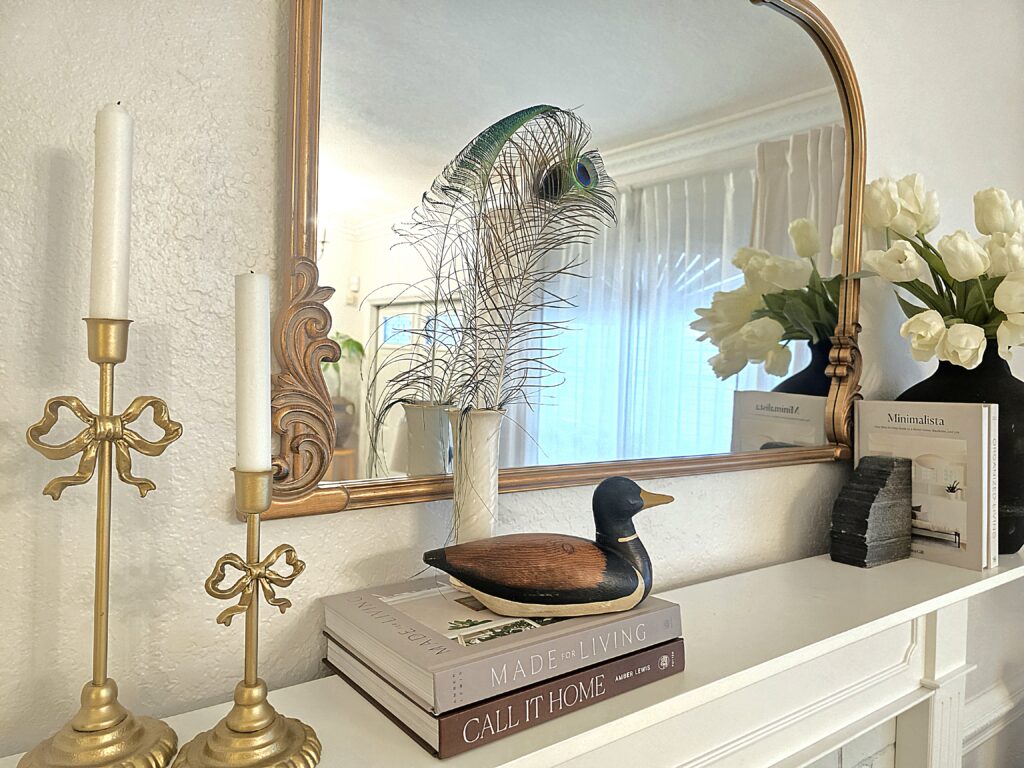
Imagine a room that’s nothing but smooth surfaces — smooth leather, smooth painted walls, smooth glass, smooth metal. Even if the colors are beautiful, the room feels flat. Now add natural wood, linen, marble, a woven basket, some aged brass, fresh greenery. The color palette barely changed, but suddenly the room feels alive.
Texture is what gives a room personality, and it’s one of the reasons I lean on natural materials whenever I can. Wood adds warmth. Linen softens hard edges. Stone adds permanence. Glass reflects light. Plants add movement. Every material contributes something different.
One of the biggest misconceptions in decorating is thinking you need more color when you actually just need another texture. I’ve walked into homes that were almost entirely neutral and still felt rich, because every material was different. I’ve also seen colorful homes that felt flat because every surface felt the same. Once you start noticing texture, you’ll never stop seeing it.
Decor Tip: Before buying another colorful accessory, ask whether the room simply needs another natural texture instead.
8. Ignoring the Architectural Details
This is where I think a lot of people spend their money in the wrong place — buying more décor when what the room actually needs is better architecture.
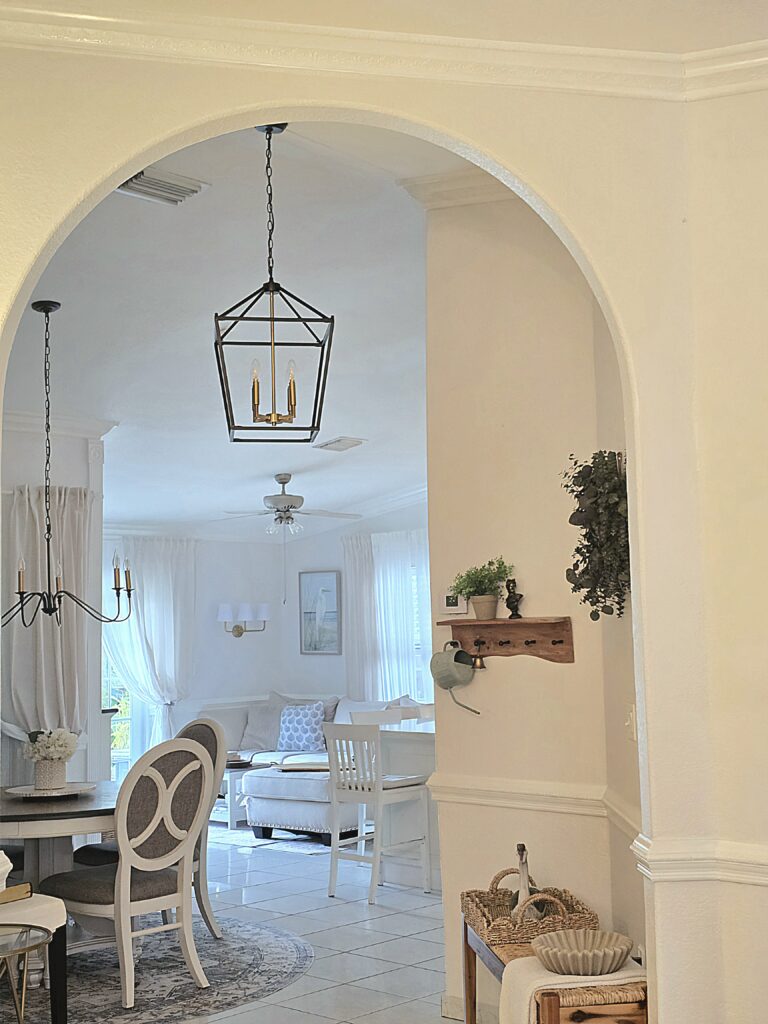
The biggest difference between a builder-grade home and a custom home usually isn’t square footage. It’s the details: crown molding, chair rail, picture-frame molding, taller baseboards, arched openings, better trim, a thoughtfully chosen light fixture. None of it screams for attention — the best architectural details almost disappear because they feel like they’ve always belonged there.
I’ve realized I’d rather spend money improving the bones of a room than buying another decorative accessory. A beautiful mirror looks even better on a wall with good trim. A gorgeous chandelier feels more intentional when the ceiling has character. That’s when a home starts feeling custom instead of decorated.
You don’t have to renovate the whole house. Sometimes one architectural improvement does more for a room than twenty decorative accessories ever could.
Decor Tip: Before buying more décor, ask whether the room would benefit more from improving its architecture.
9. Decorating Every Surface
This one took me years to learn. When I first started decorating, I felt like every empty shelf, table, countertop, and corner needed something on it. Now I decorate very differently.
“The goal isn’t to own less. The goal is to make every piece earn its place.” Some of the biggest improvements I’ve ever made happened after I removed things, not after I bought something new. When every shelf is full, nothing stands out. When every countertop has trays, candles, and decorative objects stacked together, your eye gets tired and the room starts feeling busy instead of calm.
One beautiful object surrounded by empty space has far more impact than ten objects competing with each other. Negative space isn’t wasted space — it’s breathing room, and it’s what lets your favorite pieces actually get noticed.
I remind myself of this constantly: the goal isn’t to prove how many beautiful things I own. It’s to create a home that feels calm and intentional. Sometimes decorating means putting something away, not buying something new.
Decor Tip: Before shopping for another accessory, remove three things from the room and live with it for a few days. You might find you don’t need anything new at all.
10. Chasing Trends Instead of Building a Timeless Home
If there’s one thing I hope you take from this whole article, it’s this: stop decorating for today, and start decorating for ten years from now.
Every season the internet tells us there’s a new must-have — a new paint color, a new furniture style, a new decorating trend. Try to keep up with all of them and you’ll never actually finish your house.
I’ve never wanted a trendy home. I’ve always wanted one that feels like it has a story — which is why I love mixing old with new, solid wood with glass, vintage with modern. Some of my favorite pieces weren’t expensive at all. Some were secondhand. Others were carefully chosen after months of searching. Some I’ve had for years. I don’t buy things because they’re popular — I buy them because every time I walk past them, they still make me smile.
That’s a fundamentally different way of decorating. Trends ask, “what’s everyone buying?” Timeless design asks, “will I still love this years from now?” That’s the question I ask before almost every purchase, and it’s saved me money while helping me build a home that actually feels like mine.
Decor Tip: Buy intentionally. Buy quality when you can. Buy pieces you’ll still love long after the trend is gone.
Conclusion
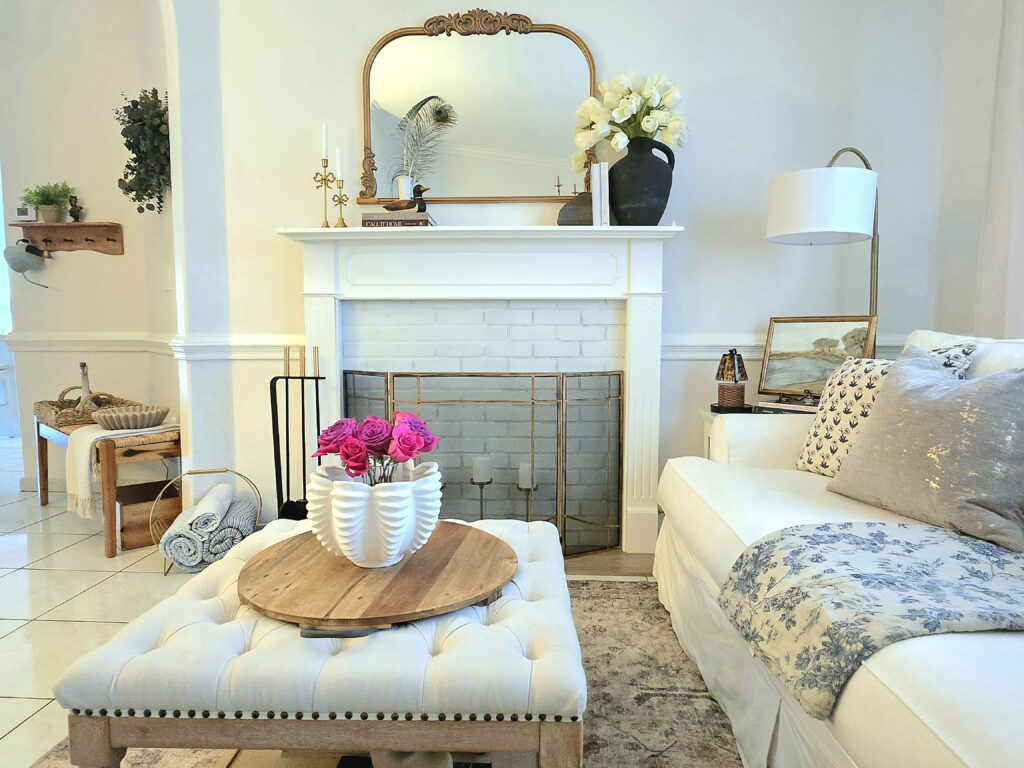
If you’ve made it this far, you’ve probably realized something: not one of these ten mistakes has anything to do with having a bigger budget. They all come down to learning to see your home a little differently.
Once you start paying attention to scale, proportion, lighting, texture, architecture, and intentional design, you’ll start noticing those same details everywhere—restaurants, hotels, model homes, and even your friends’ houses. You’ll begin to understand why one space feels inviting while another falls flat.
That’s exactly what happened to me. I didn’t wake up one morning knowing how to decorate. I trained my eye, one room at a time, one mistake at a time, one intentional decision at a time.
Your home doesn’t need to impress strangers on the internet. It doesn’t need to look like a magazine. It doesn’t need to follow every trend. It simply needs to become the best version of your home.
Because timeless design was never about perfection. It’s about creating a home that welcomes you every time you walk through the door—and one that reflects the people who live there.
Ready for the next step? If you enjoyed this article, you’ll also love How to Make a Builder-Grade Home Look Custom Without Spending a Fortune, where I share the specific changes that made the biggest difference in my own home.
If you’re decorating one room at a time and looking for practical ideas instead of passing trends, you’re in the right place. Browse more articles here on LolaMojica.com, save this post to Pinterest so you can find it later, and share it with someone who’s creating a home they love.
I’m just getting started, and I’d love to have you along for the journey.
Join Letters from Lola
New posts and seasonal ideas from my Miami home, delivered to your inbox.