Before You Buy More Decor, Do This Instead
Before You Buy More Decor, Do This Instead
I’ve caught myself doing it more than once.
A new season starts, I walk through a store, and suddenly I’m noticing everything my house supposedly needs. A different pillow. A new candle. Another vase. Something for the entry table. Something to make the living room feel “finished.”
Then I come home, look around, and realize the room wasn’t actually missing anything.
I was just looking at it through the eyes of someone who had just been shown a hundred new things to buy.
With the holidays coming and stores already full of Christmas decor, I’m feeling that pull more than usual—which is exactly why I’m writing this now.
That has changed the way I decorate.
I still love beautiful things, and I still buy pieces for my home. But I’ve become much more aware of the difference between adding decor and creating a home that actually feels good to live in.
Those are not the same thing.
Some of the warmest homes I’ve ever walked into weren’t filled with the newest things. They had books that had actually been read, furniture that had belonged to the family for years, photographs, plants, old bowls, soft lamps, and worn wood.
There were little clues about the people who lived there.
Nothing felt staged.
The room simply had a life.
That’s the kind of warmth I want in my own home.
Warmth Comes From Evidence of a Life
A home starts to feel personal when the things inside it mean something beyond how they look.
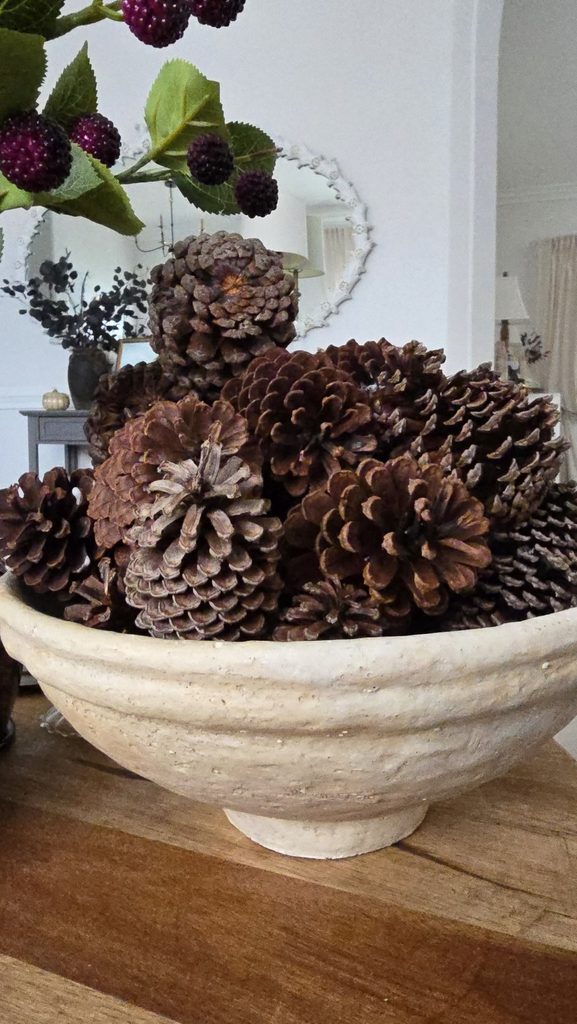
I have a bowl of pinecones that my son and I collected at the park.
There’s nothing rare or expensive about them. I could buy prettier ones in a store.
But those wouldn’t be the same.
When I look at ours, I remember the afternoon we spent together. They became part of the house because they were already part of our life.
Buying a bowl of pinecones wouldn’t give me that same memory.
Of course, not every meaningful object needs to be displayed. A home can quickly become overwhelmed when every memory becomes decor.
Still, a few pieces with history give a room depth.
They make it feel like your home rather than a version of someone else’s.
Let Some Things Age
Seeing perfectly new interiors online all the time can make us forget how beautiful age can be.
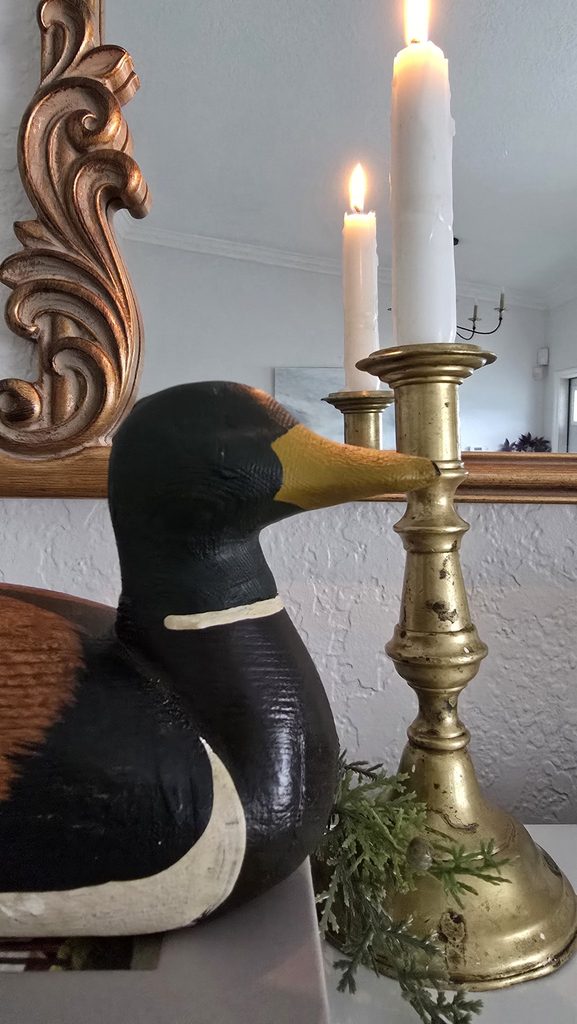
Wood changes. Brass develops character. Linen softens. Terracotta marks. Books fade.
Natural materials rarely look exactly the same five years later as they did the day they came home.
I actually like that.
A home becomes more interesting when everything doesn’t look like it arrived yesterday.
That doesn’t mean keeping damaged furniture simply because it’s old. It means allowing well-made things to develop character instead of replacing them the moment they’re no longer pristine.
There’s a difference between worn out and worn in.
The second one gives a home soul.
Bring the Outside In
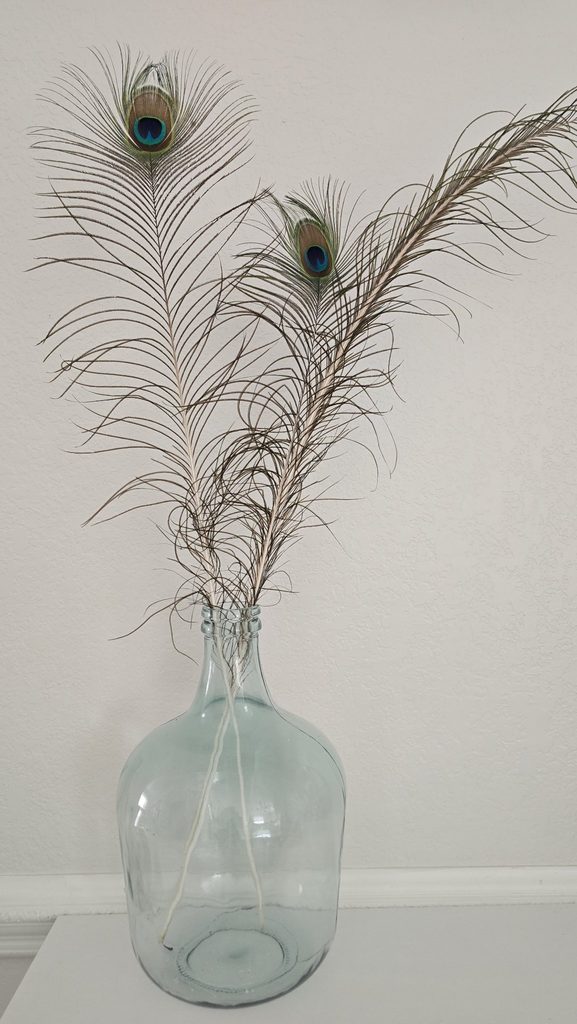
Natural elements are one of the simplest ways to make a home feel warm and inviting.
They also don’t need to become another decorating project.
Fresh eucalyptus can dry naturally over time. A branch can come in from the yard. Herbs can come from the kitchen. Fruit can sit in a bowl. Pinecones can come home from a walk. Feathers can be collected, these peacock feathers were collected from my friends yard.
These are ordinary things, and that’s precisely why they work.
A few natural elements can soften a room without adding much.
Their shapes are imperfect. Their colors vary. They change with time.
That little bit of imperfection keeps a room from feeling too polished or too planned.
Let Your Home Show How You Actually Live
This is where decorating sometimes goes wrong.
We get so focused on how a room photographs that we forget it’s supposed to serve the people living in it.
A chair should invite someone to sit.
A lamp should be where you actually need light.
Books should be within reach if you read them.
I don’t want every surface in my house to feel untouchable.
There should be beauty, but there should also be signs of use. A throw gets unfolded. A book gets left beside a chair. A glass occasionally sits on the table.
A home can be orderly without looking frozen.
The homes I remember most never felt untouched. They felt cared for, used, and lived in.
Stop Decorating Every Empty Space
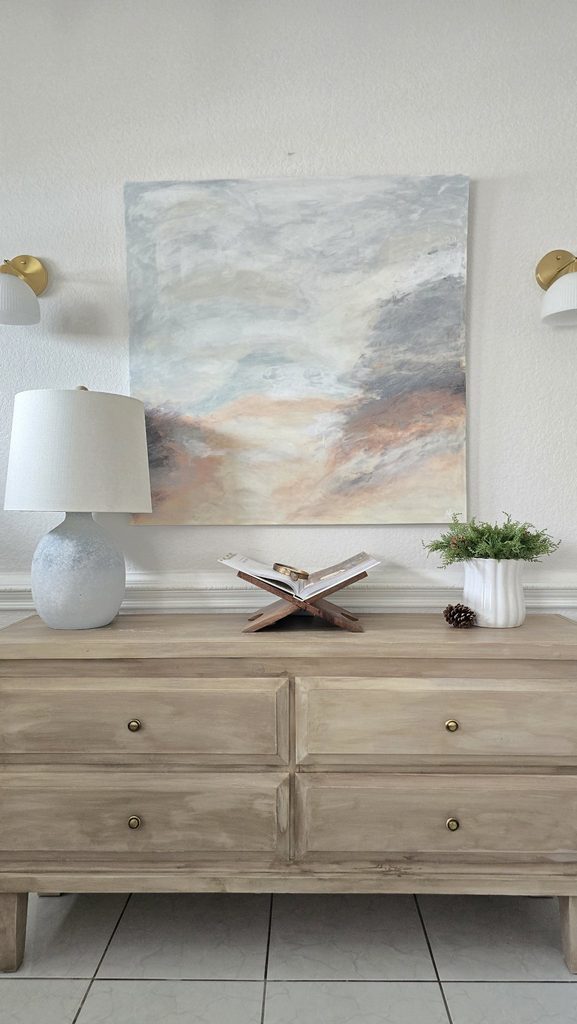
More decor does not automatically make a room feel warmer.
Often, the opposite happens.
When we decorate every table, shelf, corner, and countertop, the eye never gets a place to rest.
Sometimes the best thing you can do for a room is remove three objects and leave one.
Instead of scattering several small accessories across a console, create one strong grouping and let the rest of the surface stay quiet.
Not every empty space needs to be filled.
That restraint makes the things you keep feel more important. It also makes the room easier to live in.
Pay Attention to What You Feel, Not Just What You See
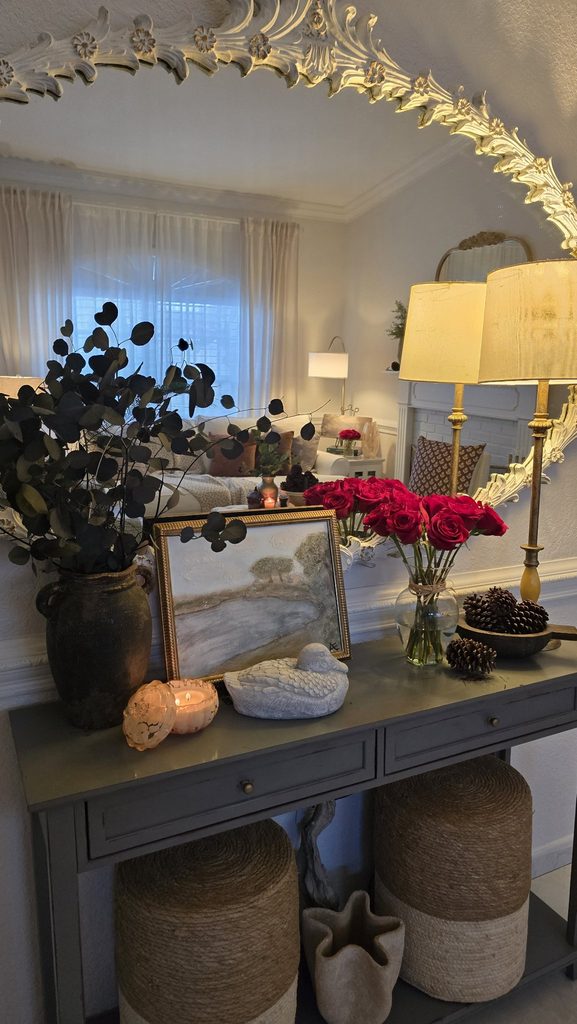
Some of the most important parts of a home are barely decorative at all.
Lighting is one of them.
A room can have beautiful furniture and still feel cold under harsh overhead light. I prefer smaller lamps and softer pools of light later in the day.
The room feels different without buying another accessory.
Sound matters too.
Sometimes it’s quiet music in the background. Other times, it’s simply quiet.
Scent works in much the same way.
These aren’t really decorating tricks. They’re atmosphere.
And atmosphere is often what we’re actually chasing when we go shopping for another candle, pillow, or seasonal accessory.
Sometimes the answer isn’t another object.
Keep Something That Reflects What You Believe
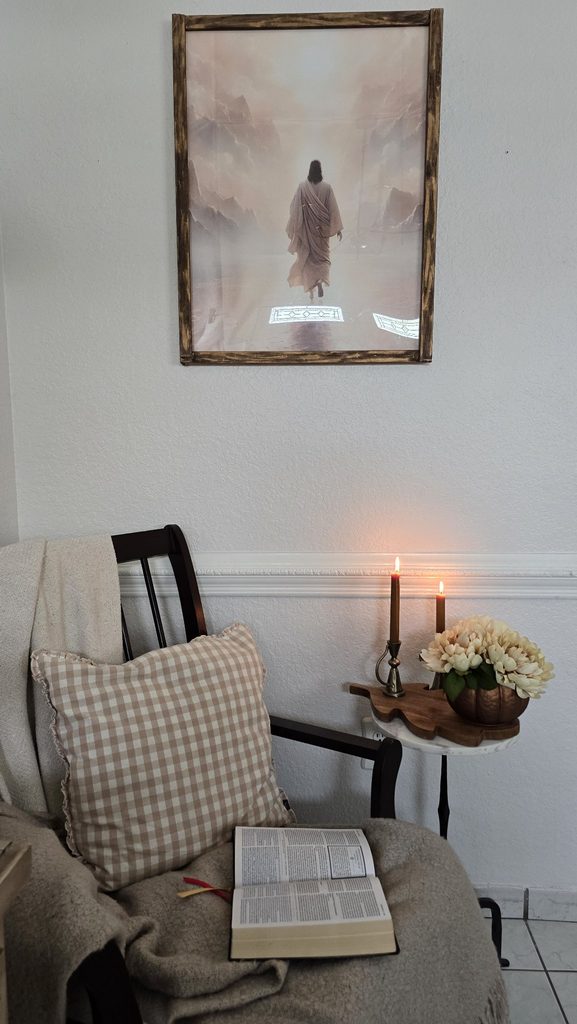
The things inside our homes tell a story whether we intend them to or not.
For me, faith belongs in that story.
I like having a meaningful verse or another quiet reminder somewhere in the house. It doesn’t need to become a themed display.
It’s simply part of our home because it’s part of our life.
The same applies to whatever is genuinely important to your family.
A personal home reflects more than decorating preferences.
It reflects your values, your history, and your people.
Before You Buy Something, Ask What’s Actually Missing
Instead of asking, What could I add here? I try to ask, What is this room actually missing?
Sometimes it really is a lamp because the room is too dark. Other times, it’s a larger rug because the current one is the wrong scale. The room may need better storage. And sometimes it doesn’t need anything at all.
It just needs editing.
There’s nothing wrong with buying beautiful things.
But I want new pieces to solve a real problem, fill a genuine gap, or be something I truly love.
I don’t want them to become one more object I have to find a place for.
The Best Homes Are Built Slowly
A truly personal home can’t be rushed.
It develops over years.
Something comes home from a trip. Someone gives you a piece that you keep forever. Furniture moves from one room to another. An old table suddenly works better than the new one you thought you wanted.
Your children grow.
Your tastes change.
And your house changes with you.
That gradual layering is what makes a home difficult to copy.
That’s a good thing.
I don’t want my house to look like everyone else’s.
I want it to look like ours.
So, the next time a room feels like it needs something, I’m not heading to the store first.
I look around.
Maybe something needs to move. Perhaps something needs to leave. A branch from the yard might belong in that empty vase. Or the room may simply need softer light.
Or maybe it already has everything it needs, and I simply needed to stop looking for something else to buy.
A warm and inviting home isn’t created by how much we bring into it.
It’s created by what we choose to keep, how we live with it, and the life that happens around it.
If the holidays are what’s tugging at you right now, start where I do — here’s how I plan my Christmas decor before I buy a single thing.
If you enjoy creating a home that feels collected rather than staged, join Letters from Lola for more decorating ideas, seasonal living, gardening, and thoughtful finds.
Join Letters from Lola
New posts and seasonal ideas from my Miami home, delivered to your inbox.