Mixing Old and New Decor Without Making Your Home Feel Dated
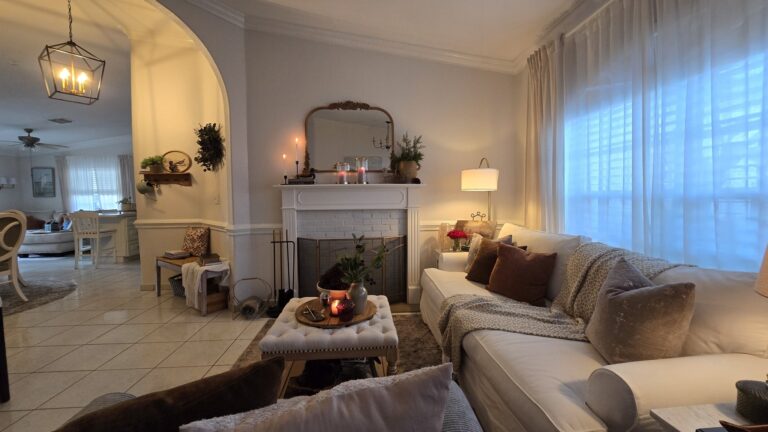
I don’t think I’ve ever wanted my home to look like I bought everything at the same time.
Actually, that’s probably one of the quickest ways for a room to lose me.
I love beautiful new things. I shop at regular stores. I buy furniture that works for our family, and I’m certainly not wandering around antique stores pretending everything in my house has been passed down for six generations.
But I also don’t want my home to look like I walked into one store, pointed at a display and said, “I’ll take the whole room.”
I want it to feel like it came together over time.
For me, that means mixing old and new.
The tricky part is doing that without making the house feel dated—or going so far in the other direction that everything old gets replaced every time decorating trends change.
I’ve found that the balance is somewhere in between.
I Don’t Care What Decade Something Came From If I Love It
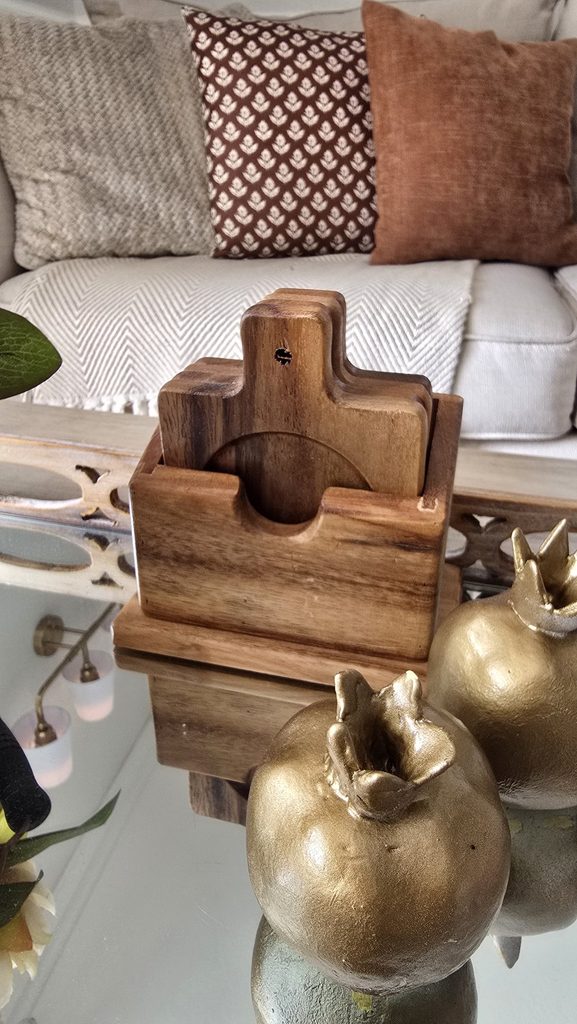
This is probably the biggest rule in my house.
I don’t automatically get rid of something because it’s old, and I don’t automatically love something because it’s vintage.
Those are two very different things.
Something can be old and beautiful.
It can also be old and ugly.
The same is true of something new.
I’m much more interested in the shape, material, color and feeling of a piece than I am in what year it was made.
If an older piece still works beautifully in my home, I’m keeping it.
If something I’ve owned for years suddenly starts making the whole room feel tired, I’m willing to look at it differently.
That’s not about following trends.
Sometimes our taste simply changes.
New Furniture Doesn’t Mean Everything Around It Has to Be New
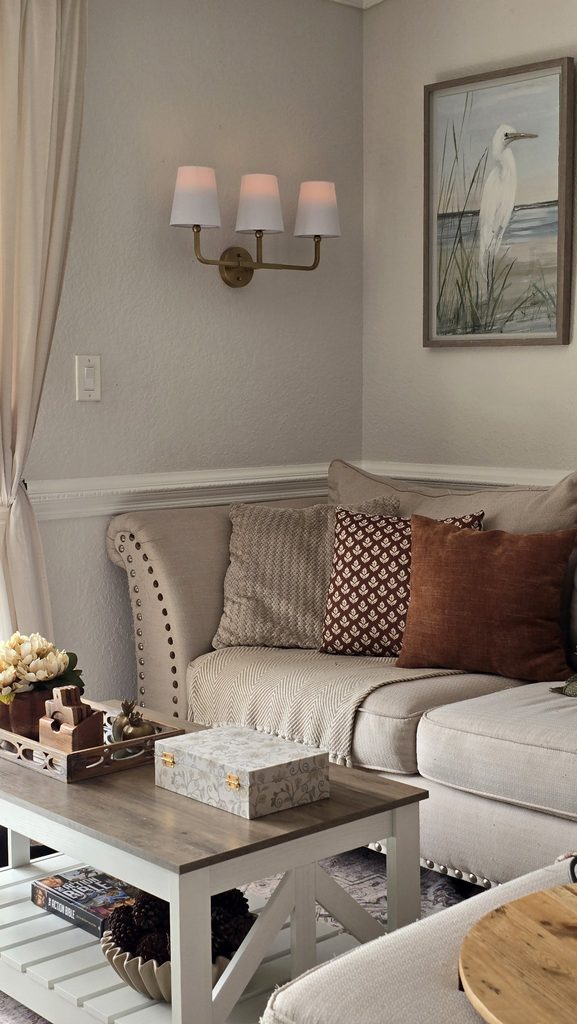
A new sofa doesn’t require a new coffee table, new lamps, new artwork, new pillows, new accessories and an entirely new personality for the room.
I think that’s where people can accidentally start creating that showroom feeling.
One new piece enters the house and suddenly everything older around it looks suspicious.
I’ve learned to give it a minute.
Sometimes the contrast between something new and something you’ve had for years is exactly what makes the room interesting.
A newer upholstered piece next to an older wood table.
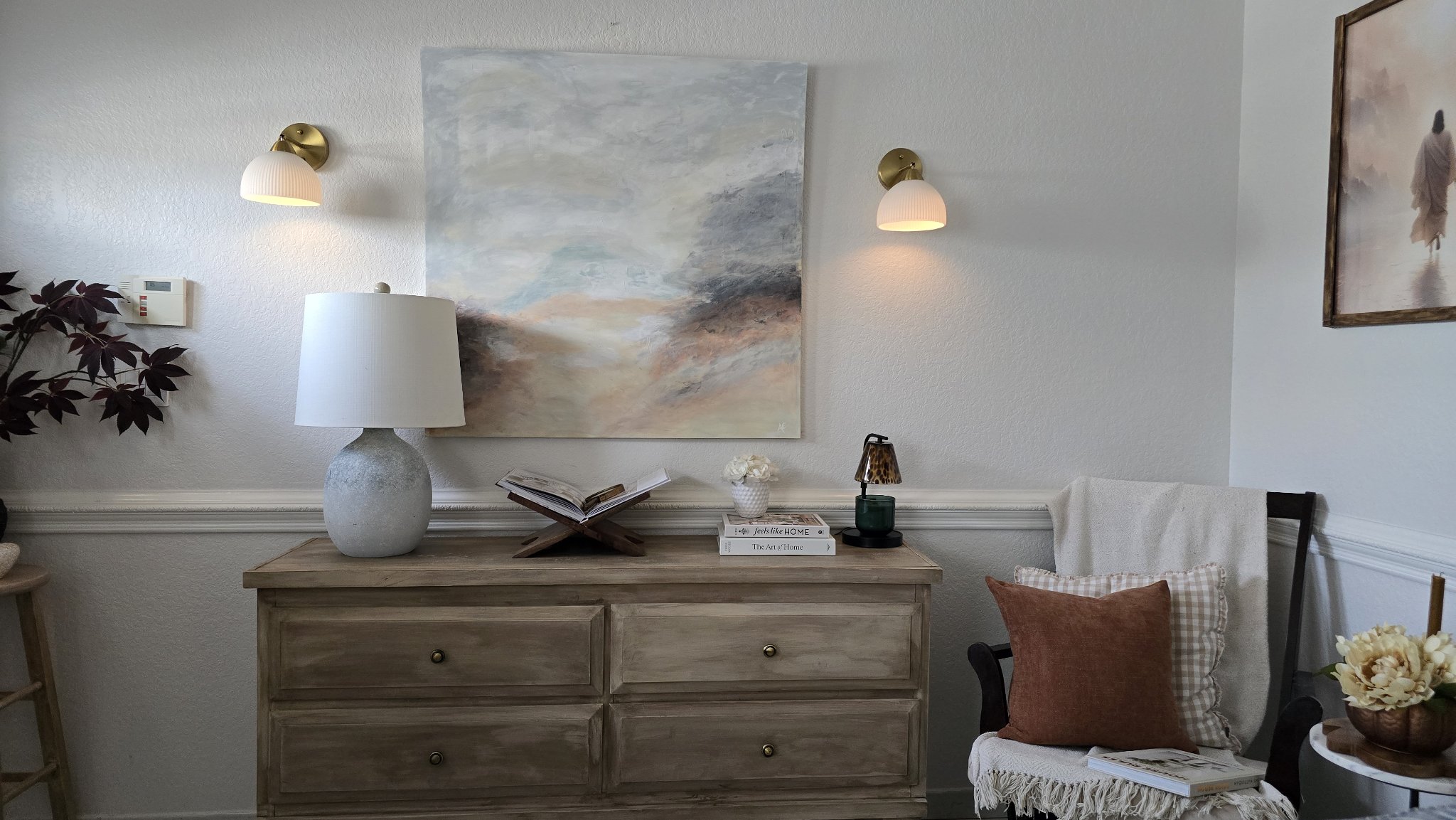
A modern lamp sitting on a traditional console.
New pillows on a chair you’ve owned forever.
A new frame around artwork you’ve had for years.
The pieces don’t have to come from the same collection to belong in the same room.
Materials Help Everything Speak the Same Language
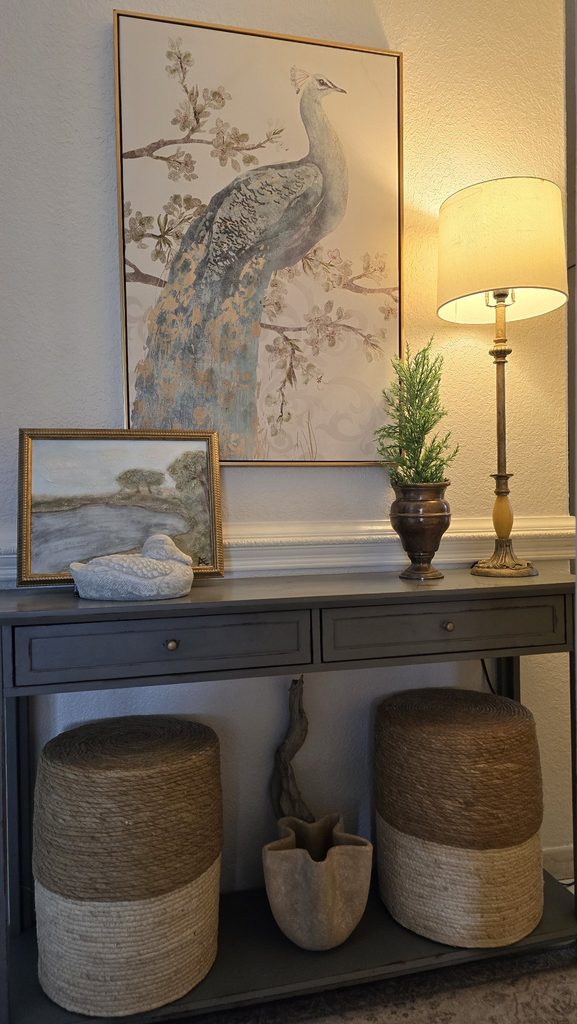
When I’m mixing pieces from different periods, I look for connections between them.
It doesn’t have to be a perfect match.
Actually, I usually don’t want a perfect match.
But maybe there’s warm wood in several places. Maybe aged brass appears again across the room. Maybe the cream in an older piece is repeated in a newer fabric.
Those little connections make things feel intentional.
This is one reason I tend to return to the same kinds of materials in my own home—wood, warm whites and creams, brass, glass, natural textures and touches of black.
I can bring home something new without it feeling completely foreign because there’s usually something elsewhere in the room that relates to it.
I Let Older Pieces Be Older
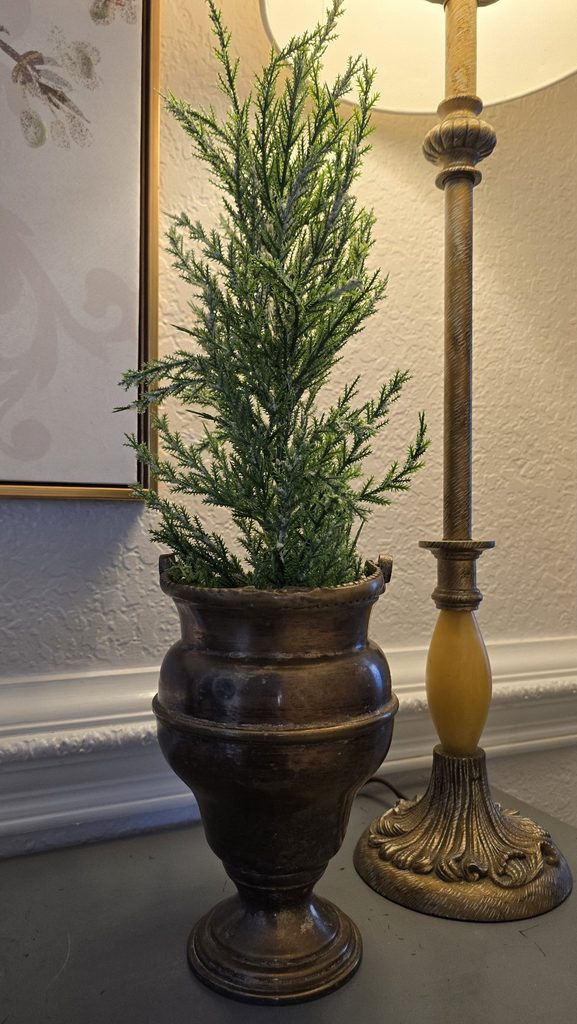
I don’t think every old piece needs to be “updated.”
Sometimes trying too hard to modernize something is what ruins it.
If I love an older wood finish, I’m not painting it just because painted furniture is having a moment.
If an old mirror has beautiful carving, I don’t need to strip away everything that makes it interesting so that it looks more current.
There are certainly times when paint, new hardware or new upholstery can completely transform something.
But I try to ask myself whether I’m actually improving the piece or just trying to erase its age.
Age isn’t necessarily the problem.
Sometimes age is exactly what a room needs.
But I Don’t Want the Entire Room Stuck in One Era
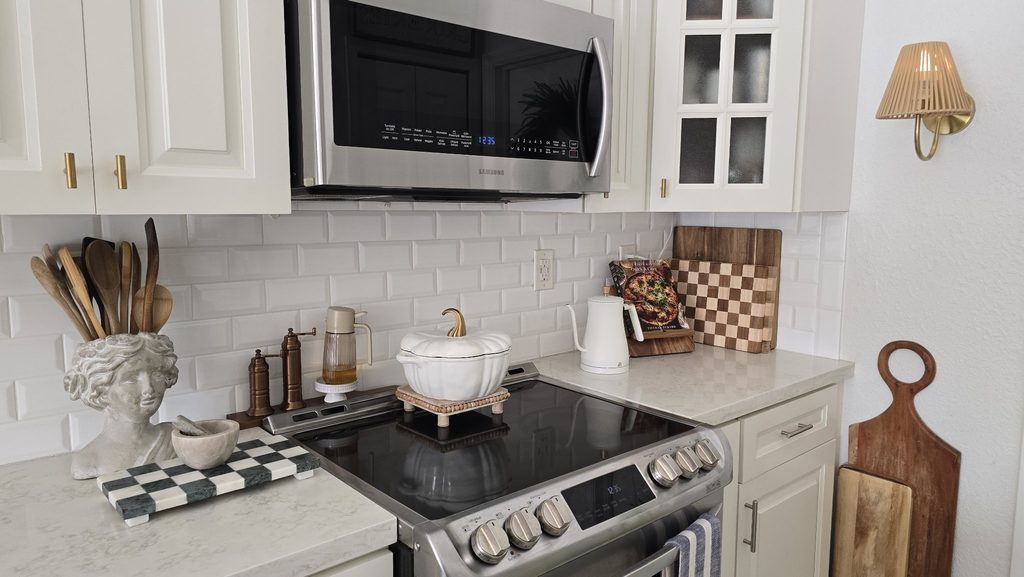
This is where the new pieces matter.
I love traditional decorating, but I don’t want my house to feel like a time capsule.
If everything is ornate, everything is dark wood, every fabric is traditional and every accessory looks antique, the room can start feeling heavier than I want.
Something cleaner can give all of those traditional details room to breathe.
That might be a simpler sofa.
A less ornate lamp.
A clean-lined side table.
A solid fabric instead of another pattern.
Even something as simple as leaving more empty space around an older piece can make it feel completely different.
I don’t need to remove the character.
I just don’t want every single thing competing to provide it.
Sometimes It’s the Styling That’s Dated, Not the Piece
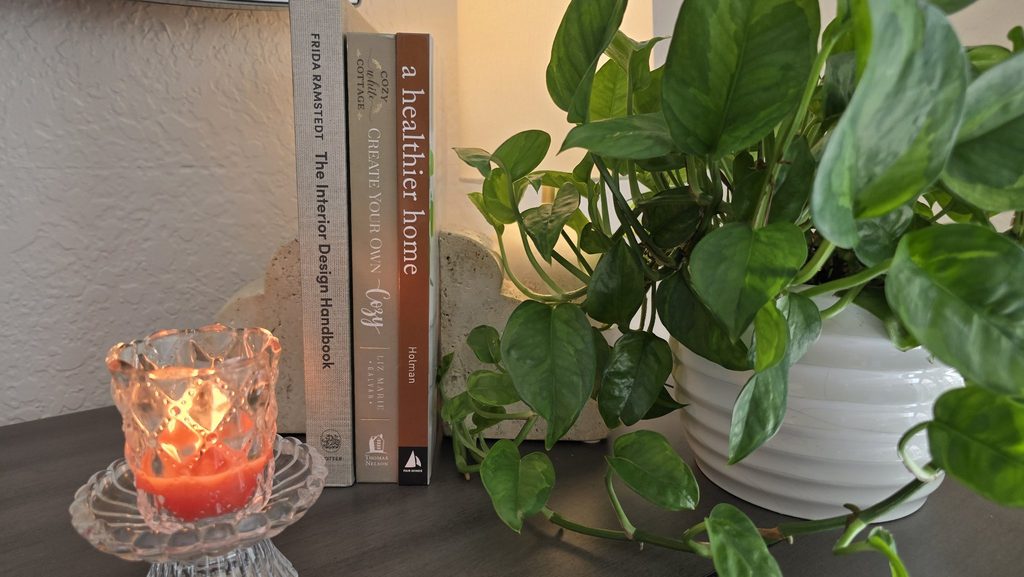
This one has saved me from getting rid of things unnecessarily.
Before deciding that I no longer like something, I’ll move it.
I’ll take everything off of it.
I’ll put it in another room.
I’ll pair it with something completely different.
Sometimes I realize I wasn’t tired of the piece at all.
I was tired of the way I had been looking at it for the last five years.
An older table covered in lots of little accessories may suddenly feel much better with a lamp, a stack of books and one larger object.
An old cabinet can feel different surrounded by newer furniture.
Artwork can look completely different with a new mat or frame.
That’s a lot cheaper than replacing everything.
And usually more interesting.
I Don’t Try to Make Everything Match
Matching and coordinating aren’t the same thing.
I want things to relate to each other, but I don’t necessarily want them to match.
I don’t need every wood tone to be identical.
I don’t need every metal finish to be the same.
And I definitely don’t need all of my furniture to belong to one set.
I’d rather repeat something just enough that it looks deliberate.
If there’s brass on one side of the room, I’ll probably want a little brass somewhere else.
If I have one darker wood piece, another darker element somewhere in the room can help balance it.
It’s less about matching A to B and more about making sure nothing feels like it accidentally wandered into the wrong house.
I Buy New Things With My Existing Home in Mind
This may be the part that matters most.
When I’m shopping, I’m not decorating an imaginary house.
I’m decorating my house.
I already have furniture. I already have art. I already have things I love. I already have colors and materials that repeat throughout our home.
So when I find something new, the question isn’t just:
Do I like this?
It’s also:
Do I like this in my house?
Those are not always the same answer.
Something can be beautiful and still have absolutely no business coming home with me.
I’ve learned that one the expensive way.
A Collected Home Needs Time
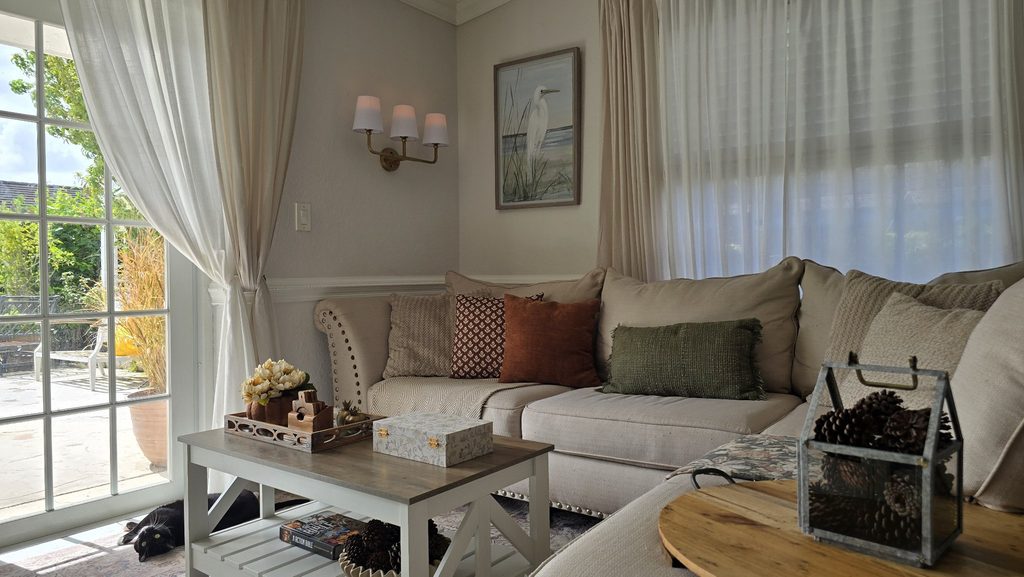
I think this is ultimately why I like mixing old and new.
It allows a home to change without constantly starting over.
Some things stay.
Some things leave.
Something new comes in.
Something forgotten gets pulled out of a cabinet and suddenly works again.
A piece moves from one room to another.
And eventually you stop being able to remember exactly when everything arrived.
That’s what I want.
I don’t want my home frozen in the year I decorated it.
But I don’t want it chasing the year we’re currently in either.
I want enough newness to keep it feeling fresh and enough history to make it feel like ours.
Because to me, a home that feels current isn’t necessarily filled with current things.
It’s a home that’s been allowed to evolve.
Join Letters from Lola
New posts and seasonal ideas from my Miami home, delivered to your inbox.